
IBISWorld Platform
Answer any industry question in minutes with our entire database at your fingertips.

IBISWorld forecasts that the total value of merchandise trade will increase by 1.9% in 2026-27, reaching $168.1 billion. This expansion in trade value is expected to be largely driven by increased export revenue, with robust global demand for New Zealand's agricultural commodities driving export revenue. Strong United States demand for beef, robust dairy and meat prices and the New Zealand-European Union Free Trade Agreement (NZ-EU FTA) is expected to support demand for products including sheep meat. Sustained demand for capital and intermediate goods, including electrical and mechanical machinery, as well as vehicles and electronics from China, will support import values. The NZ-EU FTA and the New Zealand-United Arab Emirates Comprehensive Economic Partnership Agreement (NZ-UAE CEPA), which came into force in May 2024 and August 2025, are also expected to drive import values. Elevated petroleum import prices, driven by conflict in the Middle East, will also lift import values over the year. Still, commodity prices like gold are expected to ease from recent highs and the anticipated appreciation in the New Zealand dollar will weigh on export competitiveness and the local-currency value of imports, offsetting total merchandise trade in 2026-27.New Zealand's total merchandise trade has expanded over the past five years, with both exports and imports growing despite year-to-year volatility. New Zealand's dairy and meat product industry remains the primary driver for export revenue. According to Statistics New Zealand data, dairy and meat products accounted for around 45% of export revenue in 2025-26, up from 41% in 2020-21. Export prices have been the key growth contributor, with the overall merchandise price index rising at an annualised 5.9% over the five years through 2025-26, led by dairy and meat, which rose at annualised rates of 8.0% and 8.4%, respectively. Expanding middle-class demand across Asia, particularly China, where New Zealand products are viewed as premium, has underpinned this growth. The removal of dairy tariffs under the New Zealand-China FTA and the NZ-UK FTA, which came into force in January 2024 and May 2023, respectively, has reinforced dairy exports.Import values have fluctuated but also risen over the five years through 2026-27. A depreciating dollar lifted the cost of imported goods. With New Zealand's limited manufacturing base, consumers are heavily dependent on imported goods like road vehicles and machinery. The closure of domestic refining in March 2022 has also lifted imported petroleum products over the past few years. Large spikes in oil prices due to the Russia-Ukraine conflict caused the value of refined petroleum imports to skyrocket, as New Zealand's reliance on imported fuel meant that price increases had a minimal effect on demand. Overall, IBISWorld forecasts total merchandise imports and exports to grow at a compound annual rate of 3.7% over the five years through 2026-27.
Curious about what drives these trends? IBISWorld's analyst coverage on the total merchandise imports and exports includes detailled analysis on the current performance, outlook and industries affected.
1980-2034
This report analyses the total value of merchandise trade. This includes imports and exports of all types of goods measured by their New Zealand dollar value. The data for this report is sourced from Statistics New Zealand (Tatauranga Aotearoa) and is measured in billions of current New Zealand dollars. The data is measured in financial years.
IBISWorld Industry Reports are available in multiple formats to fit seamlessly into your workflow.

Answer any industry question in minutes with our entire database at your fingertips.
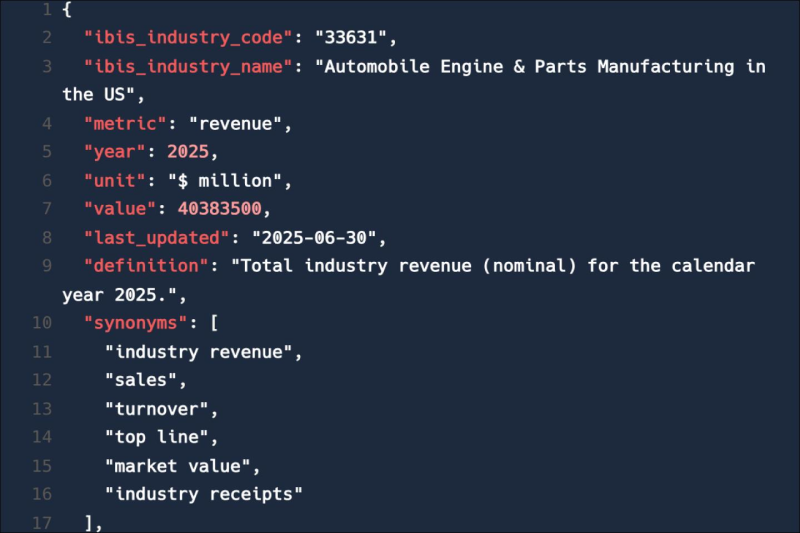
Feed trusted, human-driven industry intelligence straight into your platform.
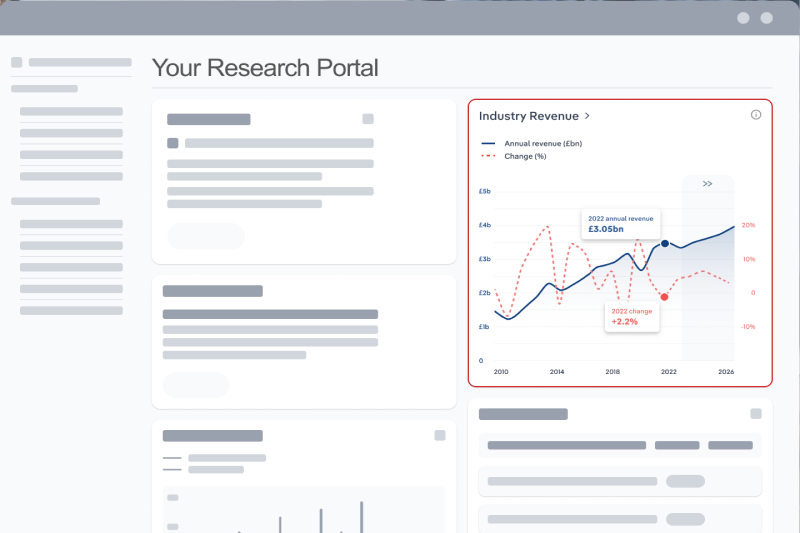
Streamline your workflow with IBISWorld’s intelligence built into your toolkit.
Explore industries with similar markets, supply chains, and economic drivers to gain broader context and insights.
| Industry | Country | Last 5-yr CAGR | Forecast 5-year CAGR | Revenue |
|---|---|---|---|---|
| Transport Equipment & Large Vehicle Rental in New Zealand |

|
XX% | XX% | $XX |
| Rail Transport in New Zealand |
|
XX% | XX% | $XX |
| Commercial Property Operators in New Zealand |
|
XX% | XX% | $XX |
| Container Terminal Operation & Other Transport Services in New Zealand |
|
XX% | XX% | $XX |
| Road Freight Transport in New Zealand |
|
XX% | XX% | $XX |
| Warehousing & Storage Services in New Zealand |
|
XX% | XX% | $XX |
When the stakes are high, you need intelligence that cuts through the noise—wherever you work.
The total merchandise imports and exports in New Zealand in 2027 was $168.1 billion.
The total merchandise imports and exports in New Zealand grew by 3.68% in 2027.
IBISWorld’s data and analysis on total merchandise imports and exports in New Zealand includes forecasted growth rates over the next five years.