
IBISWorld Platform
Answer any industry question in minutes with our entire database at your fingertips.

In 2026, the S&P 500 is projected to close the year 12.8% higher, but the index's pace of appreciation is easing from the breakneck gains of 2023–2025 as investors digest earlier policy and earnings surprises. Reciprocal tariffs announced in early 2025 injected short-term uncertainty into global supply chains, briefly cooling risk appetite before subsequent pauses and fresh trade agreements restored confidence. Market sentiment strengthens as the Trump administration's tax cuts feed through to after-tax earnings and buybacks, while mid-decade rate cuts reduce discount rates and support equity valuations, even as periodic volatility flares around labor-market releases and Fed guidance.From 2021 through 2026, the S&P 500 posted a robust compound growth rate of 10.1%, but the path was jagged as the index cycled from pandemic recovery to inflation shock and then to an AI-led rally. In 2021, strong post-COVID earnings and vaccine-driven reopening momentum kept equities buoyant, though waves of new variants periodically rattle sentiment. The backdrop shifts abruptly in 2022 as the Federal Reserve executes one of the most aggressive tightening campaigns in decades, lifting policy rates sharply just as the war in Ukraine and lingering supply bottlenecks push inflation higher, driving a deep single-year drawdown in the index. By 2023 and 2024, the market pivots back to powerful gains as investors rotate into technology and communication services on enthusiasm for artificial intelligence and productivity-enhancing software, pushing the S&P 500 to repeated record closes despite still-elevated rates. Through this five-year window, shifting trade policy, evolving supply-chain strategies and intermittent fiscal support repeatedly reprice risk, yet the index shows remarkable resilience, recovering quickly from shocks as investors adapt to a higher-rate, innovation-heavy environment.
Curious about what drives these trends? IBISWorld's analyst coverage on the s&p 500 includes detailled analysis on the current performance, outlook and industries affected.
1980-2032
The Standard & Poor's 500 stock index (S&P 500) is a commonly cited indicator of stock market performance. It is a scaled average of 500 large-capitalization common stocks in the United States. The companies in the index operate across all sectors of the economy, including energy, finance, telecommunications, retail and manufacturing. The values presented in this report are the December 31 close figures. Data is sourced from the St. Louis Federal Reserve.
IBISWorld Industry Reports are available in multiple formats to fit seamlessly into your workflow.

Answer any industry question in minutes with our entire database at your fingertips.
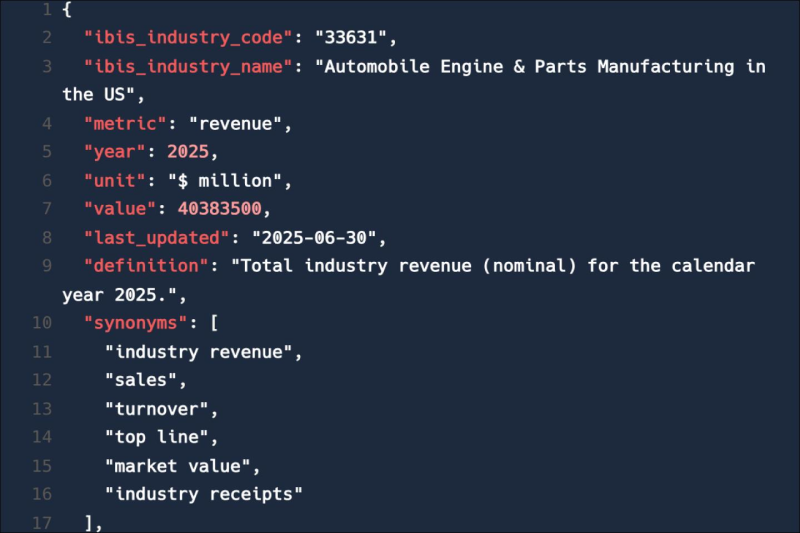
Feed trusted, human-driven industry intelligence straight into your platform.
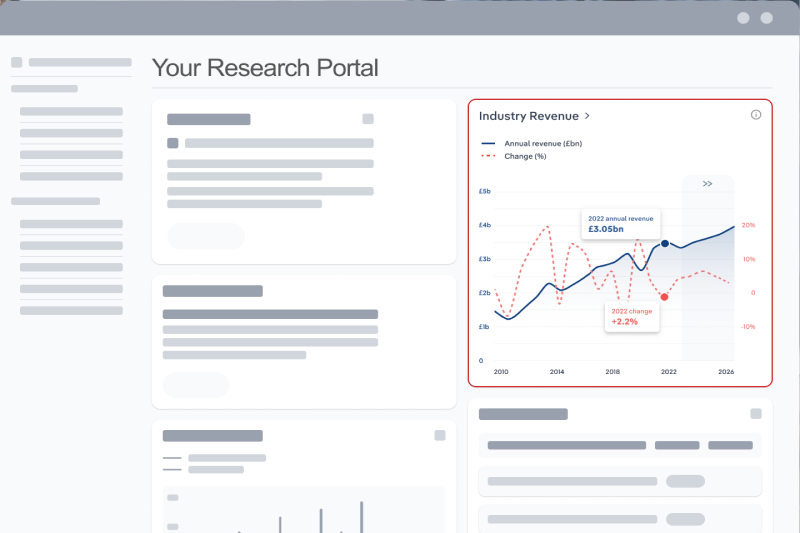
Streamline your workflow with IBISWorld’s intelligence built into your toolkit.
Explore industries with similar markets, supply chains, and economic drivers to gain broader context and insights.
When the stakes are high, you need intelligence that cuts through the noise—wherever you work.
The s&p 500 in the US in 2026 was 7,721.88 index points.
The s&p 500 in the US grew by 10.13% in 2026.
IBISWorld’s data and analysis on s&p 500 in the US includes forecasted growth rates over the next five years.