
IBISWorld Platform
Answer any industry question in minutes with our entire database at your fingertips.

The price of sawmill lumber is set to swell by 0.2% to an index value of 209.2 in 2026, continuing at the same upward pace as in 2025. This increase is driven primarily by ongoing trade tensions with Canada, including expanded tariffs on nearly all lumber imports, which have elevated costs for imported supplies. These products are facing product-specific Section 232 tariffs, meaning the Supreme Court decision to strike down IEEPA tariffs imposed under the Reciprocal Tariffs doctrine will do little to halt prices' upward ascent. However, domestic businesses produce over 85.0% of the sawmill lumber consumed in the US, meaning tariffs have only a muted impact on prices.Lapsing construction activity, especially in the residential sector, is slowing growth in the price of sawmill lumber. Economic uncertainty has delayed the benefits of the Federal Reserve's interest rate cuts in 2024 and 2025, leading to a contraction in the number of new housing starts every year from 2022 through 2026. With dampened demand for sawmill lumber from residential construction companies, prices have remained subdued. However, a moderate uptick in private spending on home improvements has slightly offset lessened demand for lumber from construction companies. The price of sawmill lumber has demonstrated significant volatility from 2021 to 2026. Prices leaped by 36.3% in 2021 as a combination of pandemic-induced supply shortages, heightened residential investment, and robust DIY home improvement activity contributed to record-high prices. This leaves the current period defined by a normalization after significant surge at its onset. Further compounding these spikes, tariffs on Canadian wood and supply chain disruptions limited the availability of lumber, putting upward pressure on prices. Inflationary pressures began to weigh on consumer spending and the real estate market, resulting in a decline in lumber prices. As interest rates rose and economic uncertainty heightened, the pace of new construction slowed further, reflected in volatile pricing throughout the year. This downward trajectory rapidly accelerated in 2023, with prices falling 25.4% from the prior year's peak as recessionary fears and mounting affordability concerns suppressed construction investment. Volatility began to ease in 2024 as the index largely finished normalizing, though it has remained significantly elevated in 2024, 2025 and 2026.The normalization of price spikes at the onset of the current period has led to a net CAGR of -5.7% growth in the price index. Despite the extreme price swings over the last five years, long-term growth has moderated as market forces gradually adjust to a new equilibrium marked by fluctuating demand and persistent trade frictions. The period underscores the importance of both construction trends and international trade policy in determining the direction of lumber prices.
Curious about what drives these trends? IBISWorld's analyst coverage on the producer price index: sawmill lumber includes detailled analysis on the current performance, outlook and industries affected.
1980-2032
The price of sawmill lumber is represented by the producer price index for sawmills in the United States with base year 1980. Data is sourced from the Bureau of Labor Statistics.
IBISWorld Industry Reports are available in multiple formats to fit seamlessly into your workflow.

Answer any industry question in minutes with our entire database at your fingertips.
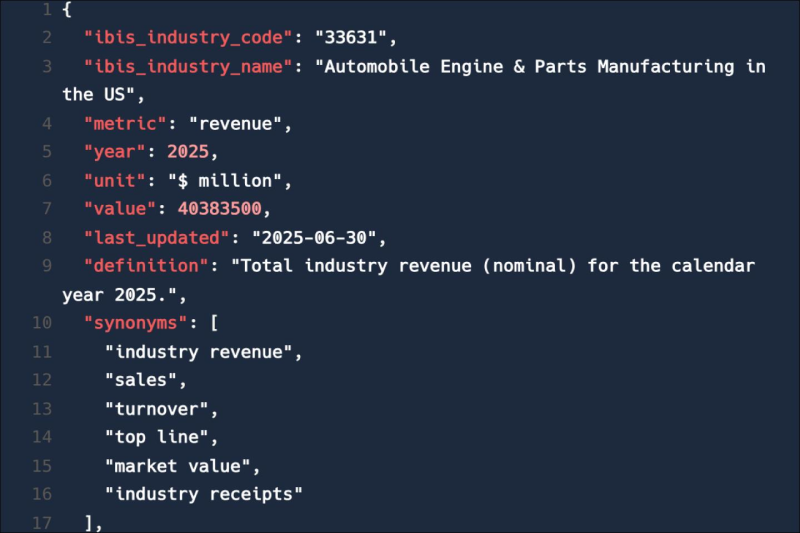
Feed trusted, human-driven industry intelligence straight into your platform.
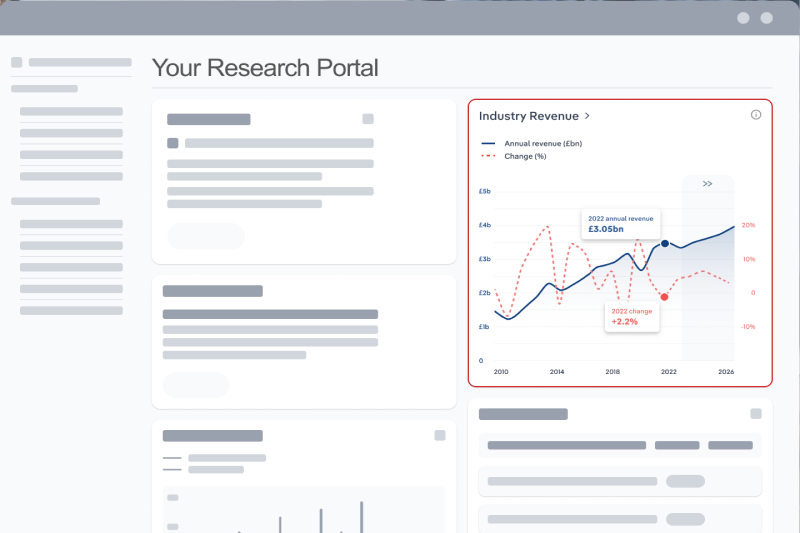
Streamline your workflow with IBISWorld’s intelligence built into your toolkit.
Explore industries with similar markets, supply chains, and economic drivers to gain broader context and insights.
When the stakes are high, you need intelligence that cuts through the noise—wherever you work.
The producer price index for sawmill lumber in the US in 2026 was 209.21 index points.
The producer price index for sawmill lumber in the US declined by -5.73% in 2026.
IBISWorld’s data and analysis on producer price index for sawmill lumber in the US includes forecasted growth rates over the next five years.