
IBISWorld Platform
Answer any industry question in minutes with our entire database at your fingertips.

IBISWorld forecasts the domestic price of natural gas to rise by 15.7% in 2025-26, to 215.7 index points. New Zealand's natural gas supply has declined by 13.0% through the first three quarters of 2025-26, as gas reserves have become increasingly scarce. As a result, natural gas prices have expanded over this time period. Natural gas is sold to residential, commercial, industrial and wholesale customers, all at varying prices. A sharp decline in demand for natural gas as a fuel source in electricity generation, supported by improved hydro and solar output compared to 2024-25 figures, has limited natural gas price growth in the wholesale market. However, industrial, commercial and residential users have been subject to significant price spikes as supply has contracted, with prices growing by over 30.0% year-on-year in the residential market over the three quarters through December 2025.New Zealand doesn't import or export natural gas. As a result, domestic natural gas prices are partially insulated from fluctuations in global gas prices. However, this self-reliance on local gas exploration has caused domestic gas prices to expand at a much swifter rate than the global market, as imports are unable to penetrate the local market and relieve inefficiencies. New Zealand's natural gas is primarily sourced from the Taranaki region on the West Coast. Gas supply has declined over the past decade as major gas fields, like Pohokura, Kupe and Maui, have matured. Gross gas production in New Zealand fell from 231.9 petajoules (PJ) in 2014-15 to 119.5 PJ in 2024-25. This declining gas supply has placed upward pressure on gas prices over the past five years. The impacts of declining gas reserves were evident in 2024-25, as domestic natural gas prices soared to new highs. A 13.2% decline in hydroelectricity generation output forced an uptick in electricity production from fossil fuels, with coal-based electricity generation doubling on 2023-24 figures. While gas electricity production dropped by 1.9%, this was largely a flow-on effect from low gas supply, which declined by 21.0% in 2024-25. Natural gas remained in high demand, causing prices to skyrocket. Through the first three quarters of 2025-26, gas production has continued to fall, down by 11.6% compared to the same period in 2024-25. This contraction in gas field output has led to a continuation in the price spikes that have impacted New Zealand's domestic gas market over most of the past decade.While New Zealand is self-reliant for natural gas usage, prices are still influenced by supply and demand conditions for substitute energy products in global markets, like oil and coal. Global oil, coal and LNG prices have all grown sharply over the past five years, due to the lasting impacts the Russia-Ukraine conflict and, more recently, the escalation of geopolitical tensions in the Middle East. These positive price shocks on non-renewable fuel inputs have also had a flow on effect on domestic natural gas prices in New Zealand, further contributing to unprecedentedly high prices.In April 2018, the Central Government (Te Kawanatanga o Aotearoa) introduced a ban on issuing new offshore oil and gas exploration permits, which has constrained exploration activity and gas supply over the period, placing further upwards pressure on prices. While the ban on new gas and petroleum exploration permits was reversed on July 1st 2025, increases in natural gas supply will be lagging, with government spokespeople estimating that new gas fields won't become operational until the mid-2030s. As a result, the ban reversal hasn't placed any significant downwards pressure on natural gas prices in 2025-26.While declining gas production has caused gas prices to rise, total gas consumption has also fallen. Gas consumption from electricity generation has declined significantly in recent years, largely a follow-on impact of decreasing supply and the increasing cost of procurement of natural gas. Household consumption has also fallen over the past five years, as consumers have increasingly switched from gas to energy-efficient electric appliances. Despite this, residential customers have increased as a share of total consumption over the period, as wholesale demand for electricity generation has declined at a faster rate. Residential customers typically pay significantly higher prices than industrial or wholesale gas users, contributing to growth in the domestic price of natural gas. Residential, commercial, industrial and wholesale prices have all increased over the past five years, mirroring trends in the overall index. Overall, IBISWorld expects the domestic price of natural gas to increase at a compound annual rate of 15.5% over the five years through 2025-26.
Curious about what drives these trends? IBISWorld's analyst coverage on the domestic price of natural gas includes detailled analysis on the current performance, outlook and industries affected.
2007-2033
This report analyses the domestic price of natural gas. The index represents a weighted average price paid by residential, commercial, industrial, and wholesale gas users in New Zealand. The historical data for this report uses the average value of quarterly prices over each financial year, is sourced from the Ministry of Business, Innovation and Employment (Hikina Whakatutuki) and is measured in index points. The base year for the index is 2019-20.
IBISWorld Industry Reports are available in multiple formats to fit seamlessly into your workflow.

Answer any industry question in minutes with our entire database at your fingertips.
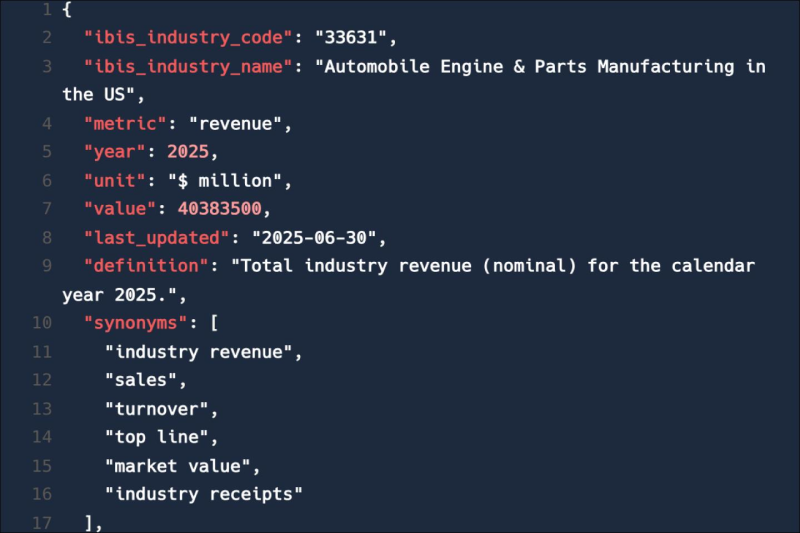
Feed trusted, human-driven industry intelligence straight into your platform.
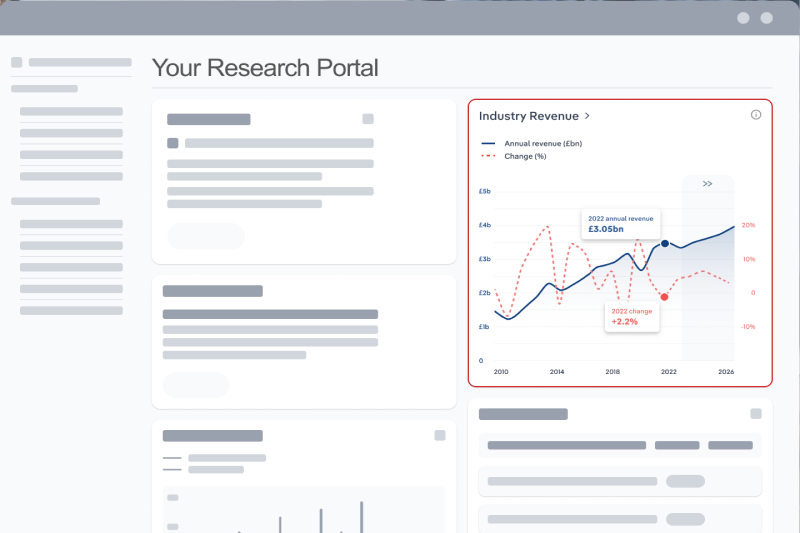
Streamline your workflow with IBISWorld’s intelligence built into your toolkit.
Explore industries with similar markets, supply chains, and economic drivers to gain broader context and insights.
When the stakes are high, you need intelligence that cuts through the noise—wherever you work.
The domestic price of natural gas in New Zealand in 2026 was 215.7 index points.
The domestic price of natural gas in New Zealand grew by 15.46% in 2026.
IBISWorld’s data and analysis on domestic price of natural gas in New Zealand includes forecasted growth rates over the next five years.