
IBISWorld Platform
Answer any industry question in minutes with our entire database at your fingertips.

IBISWorld expects the number of business tourist visitor days to decrease by 0.5% during 2025-26, to total 16.78 million days. Domestic business travel is expected to expand slightly, supported by improvements to overall business confidence. However, this growth is set to be offset by a sharp decline in international business tourism. Through the first six months of 2025-26, international business tourism has declined by 16.1% compared to the same period in 2024-25. However, given that international business tourists are only expected to account for 11.0% of total business visitor days in 2025-26, the overall impact will be less pronounced. Before the pandemic, underlying growth in business travel had stagnated, with a compounded annual growth rate of 0.2% between 2011-12 and 2019-20, as technological adoption increased, reducing some of the need for business travel. These trends were accelerated by the onset of the pandemic in 2020-21, which significantly limited travel, particularly from international business tourists. Domestic business travel was less impacted, limiting the impact on total business tourist visitor days. As business conditions gradually returned to relative normality throughout 2021-22 and 2022-23, combined with the reopening of international borders, total business tourist visitor days recovered. The effects of the pandemic have subsided, but its impact on working conditions continues to be a significant influence on corporate travel trends. The usage of remote videoconferencing platforms has remained almost universal, constraining businesses from returning to face-to-face meetings. As a result, the number of total business tourist visitor days in 2025-26 is expected to remain well below the recorded pre-pandemic peaks of business travel. Over three-quarters of business tourist visitor days can be attributed to local residents, with business confidence and the number of businesses being two key drivers of domestic corporate travel. While the number of businesses has grown steadily over recent years, fluctuations in business confidence have caused additional volatility in the number of business tourist visitor days undertaken by domestic residents. Overall, IBISWorld forecasts the number of business tourist visitor days to grow at an annualised 2.6% over the five years through 2025-26.
Curious about what drives these trends? IBISWorld's analyst coverage on the business tourist visitor days includes detailled analysis on the current performance, outlook and industries affected.
2000-2033
This report analyses the total number of days spent in New Zealand by domestic and international visitors for business purposes. The data is sourced from Statistics New Zealand (Tatauranga Aotearoa) and represents the number of overnight trips and return day trips per financial year. A day trip is defined as a return journey to a location at least 40 kilometres away from a traveller's usual place of business.
IBISWorld Industry Reports are available in multiple formats to fit seamlessly into your workflow.

Answer any industry question in minutes with our entire database at your fingertips.
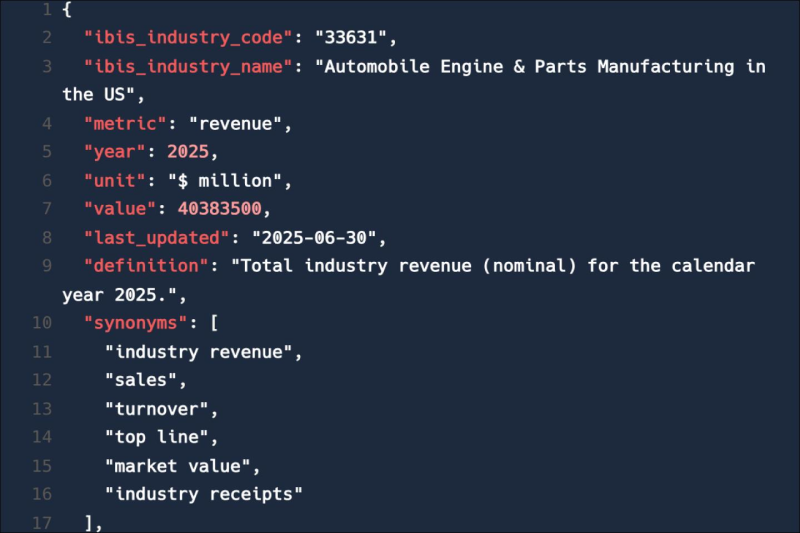
Feed trusted, human-driven industry intelligence straight into your platform.
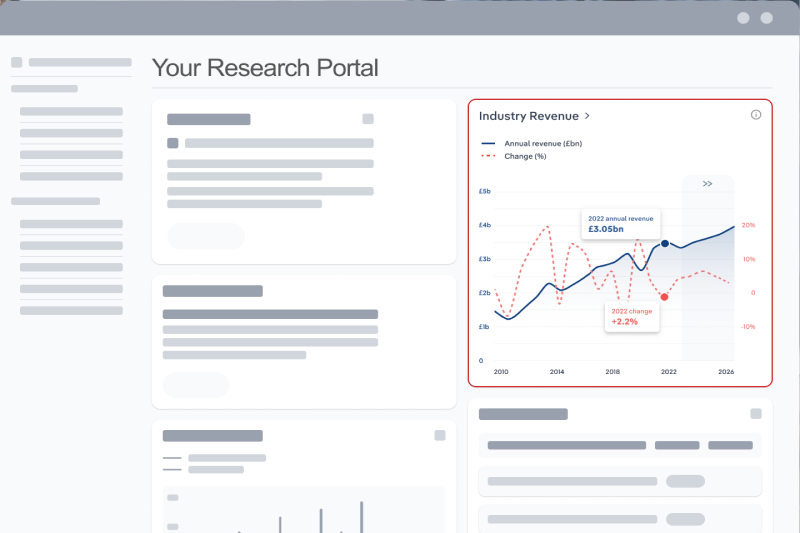
Streamline your workflow with IBISWorld’s intelligence built into your toolkit.
Explore industries with similar markets, supply chains, and economic drivers to gain broader context and insights.
| Industry | Country | Last 5-yr CAGR | Forecast 5-year CAGR | Revenue |
|---|---|---|---|---|
| Hotels and Resorts in New Zealand |

|
XX% | XX% | $XX |
| Motels, Hostels and Holiday Parks in New Zealand |
|
XX% | XX% | $XX |
When the stakes are high, you need intelligence that cuts through the noise—wherever you work.
The business tourist visitor days in New Zealand in 2026 was 16.78 million.
The business tourist visitor days in New Zealand grew by 2.57% in 2026.
IBISWorld’s data and analysis on business tourist visitor days in New Zealand includes forecasted growth rates over the next five years.