Soybean Farming in the US
Definition
Farms in this industry grow soybeans as their main crop. Soybeans are most often used in livestock feeds and vegetable oils, with a small but growing proportion used in biofuel production. Establishments that sell soybean seeds to US farmers for growing crops are also included.
What's Included
- Growing soybeans for oil
- Growing soybeans for meal
- Growing soybeans for their hull
Companies 0
Related Industries
Additional Resources
Codes
Related Terms
Key Takeaways
Performance
Surging biofuel demand and record domestic crush are creating new opportunities for soybean farmers, but overall revenue remains under pressure after several years of weak prices and heavy global supplies. Many growers are responding by shifting acres toward soy and pushing for higher yields and better basis near crush and biofuel hubs to support profit in a still-challenging price environment.
Climate change will add volatility to crop yields and force farmers to reassess production practices. The effects of extreme seasons and weather events will likely inhibit production, supporting prices, though farmers will also face higher operating costs.
US soybean exports are under pressure as Brazil ramps up production and China cuts its US imports. Farmers are diversifying markets to sustain their trade volume, emphasizing quality and sustainability to stay competitive.
Go to chapterProducts and Markets
Refineries need soybean oil for biodiesel. Biofuel production has grown after supply chain disruptions at home and abroad increased gas and diesel prices during the current period.
Health consciousness among buyers is a challenge to soybeans in the edible oil market. Consumers are spending a premium on oils they see as healthier and avoiding seed oils.
Go to chapterProducts and Services
Key External Drivers
| Key External Drivers | Impact |
|---|---|
| Demand from organic basic chemical manufacturing | Positive |
| World price of soybeans | Positive |
| Trade-weighted index | Negative |
| Subsidies for soybean farming | Positive |
Industry Structure
| Characteristic | Level | Trend |
|---|---|---|
| Concentration | Low | |
| Barriers To Entry | High | Steady |
| Regulation and Policy | Moderate | Steady |
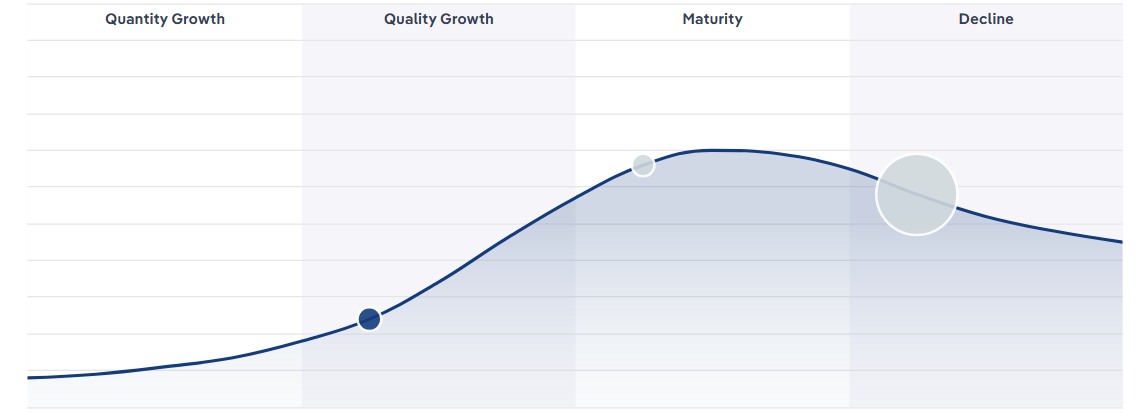
| Life Cycle | Growth | |
| Revenue Volatility | High | |
| Assistance | Moderate | Steady |
| Competition | Moderate | Increasing |
| Innovation | Low |
SWOT
Strengths
- High Profit vs. Sector Average
- Low Customer Class Concentration
- High Revenue per Employee
- High & Steady Barriers to Entry
- Growth Life Cycle Stage
- Low Imports
Weaknesses
- High Volatility
- High Product/Service Concentration
- High Capital Requirements
Opportunities
- High Revenue Growth (2026-2031)
- Trade-weighted index
Threats
- Low Revenue Growth (2005-2026)
- Low Revenue Growth (2021-2026)
- Low Outlier Growth
- Low Performance Drivers
- World price of soybeans
Executive Summary
Industry revenue for soybean farmers in the US has contracted over the past five years, even as structural demand from domestic crushers and biofuel producers has strengthened the underlying market. Industry revenue has fallen at a CAGR of 5.2% since 2021 to an estimated $44.5 billion in 2026, including a 1.9% decline in 2026. Robust growth in soybean oil use for biomass-based diesel and renewable diesel, combined with record or near-record crush volumes, has helped offset weak export demand and provided a floor under prices, but not enough to fully counteract the revenue drag from the earlier price downturn and rising operating expenses. New and expanded crush capacity has supported local basis improvements around processing and biofuel hubs, giving nearby growers a relative price advantage and incentivizing acreage shifts toward soy, yet overall industry performance remains constrained by high fertilizer, fuel and labor costs and the lingering impact of 2024/25's multi-year price lows.
Trade and export markets remain a central swing factor for the industry, with recent volatility reshaping both current performance and the medium-term outlook. China's pullback from US soybeans during 2025 tariff tensions, and its ongoing pivot toward Brazilian supplies, have sharply reduced US export volumes to China, eroding one of the industry's highest-value outlets even as domestic crush expanded. A new framework announced in late 2025, under which China committed to purchase at least 25 million metric tons of US soybeans annually through 2028, has stabilized flows and supported prices but still leaves exports below pre-trade-war peaks and subject to policy risk. Looking ahead, USDA long-term projections suggest US export volume growth will be modest and more diversified, with incremental gains in Latin America, North Africa, the Middle East and Southeast Asia partially offsetting structurally lower dependence on China.
Over the next five years, industry revenue is forecast to continue contracting, shrinking at a CAGR of 1.1% to $42.4 billion in 2031 as modest volume gains and firm demand fail to fully overcome persistent price and cost headwinds. Soybean and soybean oil prices are projected to improve into the 2026/27 season on the back of record biofuel mandates, tighter balance sheets and record crush, but then soften over the remainder of the outlook period, limiting topline growth even as demand for oil and meal remains solid. At the same time, climate-related yield pressures, higher input requirements and regional production risks will keep operating costs elevated, constraining profitability despite gradual export recovery and continued domestic demand growth. As a result, the industry's outlook is characterized less by a strong cyclical rebound and more by a slow, policy-driven stabilization in which efficient, well-located producers near crush and biofuel hubs are best positioned to outperform in an otherwise unfavorable revenue environment.
Key Takeaways
Refineries need soybean oil for biodiesel. Biofuel production has grown after supply chain disruptions at home and abroad increased gas and diesel prices during the current period.
Health consciousness among buyers is a challenge to soybeans in the edible oil market. Consumers are spending a premium on oils they see as healthier and avoiding seed oils.
Products & Services Segmentation
The production of soybean meal grows alongside the livestock industry
- Soybean meal includes ground soybeans that have had their oil extracted and are mainly used for animal feed. The USDA reports that soybean crush is expected to reach a record high of 2.6 billion bushels in the 2025/26 marketing year (MY), up from 2.4 billion in 2024/25. This production growth makes US soybean meal well-positioned to meet growing domestic and international demand, supporting the expansion of the livestock and poultry sectors.
- Domestic disappearance, which refers to the total amount of soybean meal consumed within the US for purposes like feeding livestock, is forecast to increase by 3.4% between the 2024/25 and 2025/26 MYs. This steady growth mirrors the expected rise in pork and poultry production, with the USDA projecting gains in domestic meal use alongside record soybean crush and rising meat production.
- Competitively priced at $300.0 per short ton for 2025/26, down from $384.1 in the 2023/24 season and at a similar level to the 2024/25 season, soybean meal offers a budget-friendly option for feed manufacturers, boosting its domestic relevance. Though the price of soybean oil has also dropped, the price of soybean meal has declined more quickly, preventing its share of industry revenue from growing more dramatically.
Heightened biofuel production drives soybean oil sales
- Soybean oil is a versatile product derived from soybeans. It is used extensively as a feedstock in biofuel production and as an ingredient in food, feed and industrial products.
- US soybean oil production is estimated to reach 30.2 billion pounds in the marketing year 2025/26, up from 31.2 billion pounds the previous year. This increase has been driven by expanded domestic soybean oil demand, particularly as a biofuel feedstock.
- Domestic US soybean oil consumption is on the rise, fueled by biofuel production, which alone is estimated to use 14.0 billion pounds in the 2025/26 MY. Growth has been tempered by the use of lower carbon-intensity feedstocks. As production rises, soybean oil prices are pushed down, but overall increased demand has boosted revenue share from this product segment. The use of soybean oil in human food products has also been limited by health concerns surrounding seed oils.
Soybean hulls maintain a small share of soybean revenue
- Soybean hulls are the fibrous outer coating of soybeans, produced as a byproduct during the extraction of soybean meal and oil, and are primarily used as a nutritious component in animal feed. Although soybean hulls represent a small fraction of overall soybean revenue, their consistent market presence stems from their value in the livestock feed industry. They are widely used in ruminant diets because their digestible fiber content supports rumen function and can substitute for more expensive grain or forage ingredients without compromising animal performance in cattle, sheep and goats.
- The stability in soybean hull sales reflects their ongoing demand in feed formulations. They offer an economical alternative to other feed ingredients, especially in cost-sensitive industries such as cattle and sheep farming, where fiber is essential. This allows producers to optimize feed costs while maintaining nutritional value.
What are innovations in industry products and services?
LowDrought and efficiency traits in soybeans are accelerating in their development
- Over 50 researchers in the soybean genomics community have set a 2024 through 2028 strategic plan that prioritizes drought tolerance, nitrogen-use efficiency and seed composition, as reported in the Plant Genome journal. This roadmap is already steering funding, germplasm screening and trait discovery pipelines toward stress-resilient and premium-quality cultivars.
- Rapid advances in multi-omics, genomic selection and CRISPR-based editing are shortening breeding cycles and increasing the probability of stacking these complex traits into elite lines, as discussed by plant geneticists in Plants in 2025. As these genomics-enabled varieties move into commercial portfolios over the medium-term, farmers stand to gain tools that stabilize yields under climate volatility and unlock higher value markets in high-protein meal and customized oil profiles.
Drought-tolerance breeding and phenotyping platforms move toward field deployment
- Genome-wide association studies have identified dozens of loci and candidate genes linked to drought tolerance in soybean, and KASP markers have already been developed for key SNPs associated with performance at germination, according to researchers writing in Frontiers in Genetics in 2024. These markers enable breeders to select drought-tolerant lines more efficiently, even before full-season field testing.
- New high-throughput phenotyping platforms that combine imaging, metabolomics and remote sensing are being rolled out to characterize drought responses at scale. Uptake of these tools is still concentrated in public and large private programs, but as costs fall, they are likely to speed delivery of drought-resilient cultivars that reduce yield drag in water-limited environments.
Invest in research and development
By investing in R&D, soy farmers can improve crop yields, enhance disease resistance and reduce environmental impacts, which helps maintain competitiveness and address the evolving demands of the agricultural sector.
Secure access to high-quality inputs
Accessing high-quality seeds and nutrients ensures optimal plant growth and productivity. This helps soy farmers to produce higher yields and meet market quality standards, ultimately contributing to business success.
Major Markets
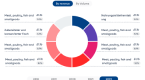
Major Markets Segmentation
The soybean market has been bolstered by robust poultry feed demand
- The demand for poultry feed has remained resilient, with integrators steadily expanding or maintaining flocks to meet strong consumer preferences for chicken and other white meats. This persistence in poultry production supports heavy, ongoing use of soybean meal in broiler and layer rations, keeping US domestic soybean meal disappearance on a modest growth path rather than allowing any major pullback. The USDA's agricultural projections through 2035 show the consistently high production levels of recent years continuing into the medium-term.
- Strong US soybean crops in the current period have helped keep soybean meal relatively affordable for poultry producers, even as labor, energy and housing costs remain elevated. Meal prices have eased from their sharp peaks in 2022, easing feed-cost pressure for chicken companies while still underpinning solid demand for soybeans from crushers and feed manufacturers who serve the poultry sector.
Resilient hog, dairy and beef herds quietly anchor soybean demand
- This market segment includes rations for hogs, dairy and beef cattle, aquaculture and specialty livestock that use soybean meal as a high-protein ingredient alongside grains and byproduct feeds. Hog and cattle sectors have faced supply tightness, disease risks and shifting export demand in the current period, which has tempered herd growth and kept soybean meal use in these channels growing more slowly than in poultry.
- China remains the largest single importer of US soybeans for crushing into animal feed, but its import growth has slowed, and competition from Brazil has intensified. After a period of sharp import cuts, a late-2025 trade framework committed China to sizeable US purchases through 2028, yet these volumes are still below pre-trade-war highs and remain vulnerable to policy and price shifts. This reinforces the need for US farmers and exporters to deepen relationships in other growth markets and diversify feed-driven demand beyond China to sustain overall soybean exports.
Food use demand has diversified across traditional and modern soy foods
- Food use covers traditional soy products such as tofu, soy milk and soy sauces, as well as modern applications like plant-based meat analogs and fortified packaged foods that incorporate soy protein. Demand is underpinned by health-conscious consumers and customers looking to cut meat out of their diets as well as general interest in low-cost plant proteins, even as the early surge in plant-based meat sales has cooled.
- Growth is now more balanced, with steady expansion in mainstream soy foods offsetting slower momentum in highly processed meat substitutes. This leaves food use as a mid-sized but relatively stable demand channel that supports value-added processing and offers some insulation from commodity feed and fuel cycles.
Biofuels market reshapes soybean oil demand through policy and capacity
- Biofuels encompass biodiesel, renewable diesel and related advanced fuels that use soybean oil as a key feedstock under federal and state low-carbon fuel policies. Rapid investments in renewable diesel capacity and supportive policies have driven a marked increase in soybean oil use for fuel, though growth has become more volatile as obligated parties seek lower-carbon alternatives like used cooking oil and tallow.
- The USDA's early 2026 projections show soybean oil use for biofuel rising to historically high levels, anchoring demand and helping lift crush volumes even when export demand for whole beans softens. However, evolving sustainability rules and feedstock credit structures mean this market remains exposed to policy risk, which can quickly alter the economics of soy-based biofuels.
Industrial uses expand soy's role beyond food and fuel
- Soybeans support a growing portfolio of industrial products that use soy products as renewable substitutes for petroleum-based inputs. Key applications include biobased lubricants, hydraulic fluids, solvents, coatings, inks, adhesives and foams, where soy-derived components improve biodegradability and help users meet internal sustainability goals or procurement standards for bio-based content.
- In the lubricant and coatings space, soy-based esters and resins are gaining ground in niches like chainsaw oils, metalworking fluids, concrete release agents and traffic paints, where performance is comparable and environmental regulations or worker-safety concerns favor less toxic, low-volatile organic compound (VOC) formulations. Public-sector purchasing policies and corporate ESG commitments are encouraging wider trials of soy-based products in municipal fleets, construction and manufacturing, which gradually deepens industrial demand for soybean oil even when biofuel markets are volatile.
International Trade
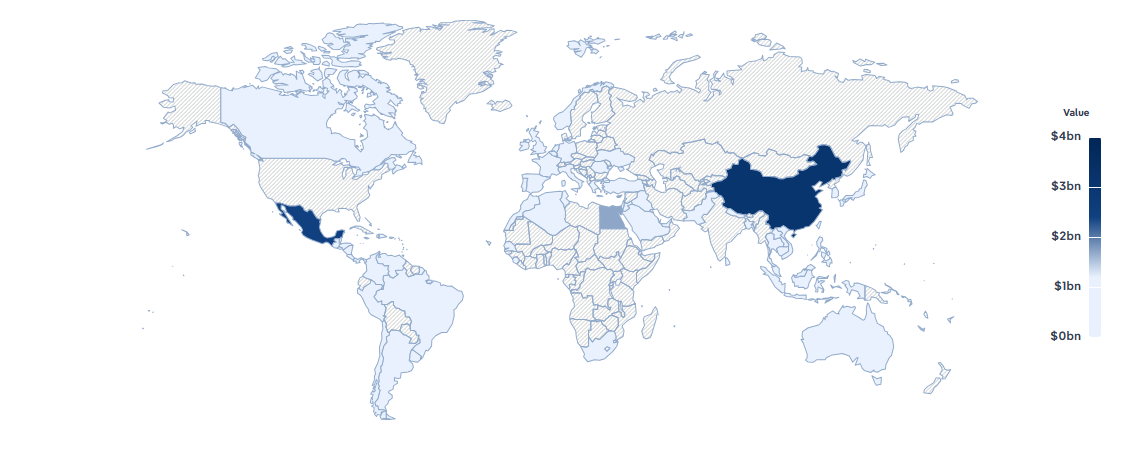
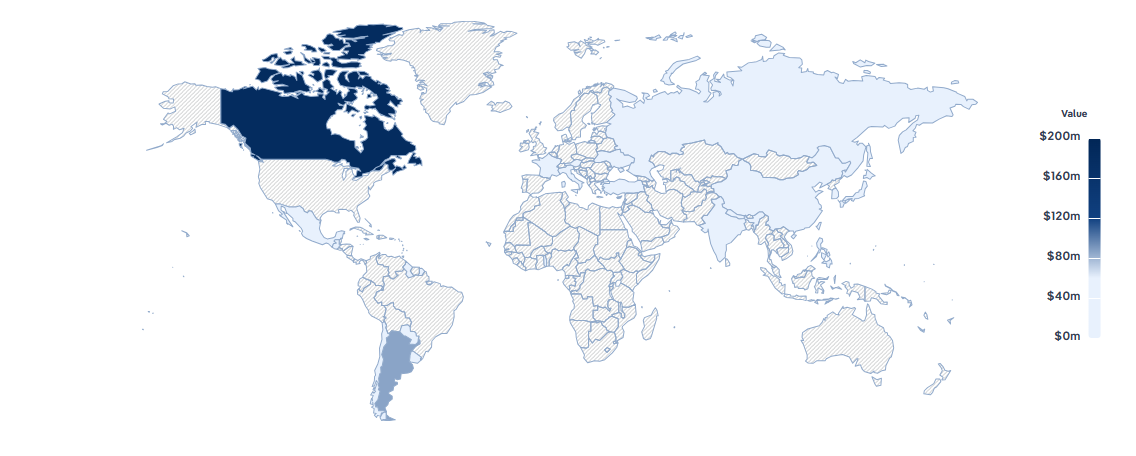
Exports account for more than half of US soybean sales, making the industry highly trade-exposed, while imports are negligible. A depreciating US dollar and diversification beyond China toward Latin America, North Africa, the Middle East and Southeast Asia are expected to support a gradual export recovery over the outlook period.
International Trade: Imports and Exports
Imports
LowDecreasingCanada anchors limited US soybean import needs
- The United States is a major soybean exporter, so total soybean imports are relatively small, but Canada consistently ranks among the top suppliers of soy products into the US. Canadian shipments include soy oilcake, whole beans and processed soy products that move efficiently across a deeply integrated North American supply chain and often serve crushers and feed manufacturers in border states.
- These Canadian flows help cover regional shortfalls, meet specific processing requirements and serve niche markets without fundamentally changing the United States' status as a net soybean exporter. Shared standards, rail connectivity and long-standing commercial relationships make Canada a reliable, low-friction source when domestic logistics or harvest patterns create local gaps.
- For US farmers and processors, Canadian-origin supplies act as a flexible risk mitigator that can step in when certain product forms or nearby volumes are needed quickly. Because overall import volumes remain small relative to domestic output, these inflows influence profit and procurement strategies at crushers and feed mills more than they displace large amounts of US-grown beans, keeping the industry's strategic focus on export competitiveness and not defending the home market.
Non-GMO and food-grade soy imports fill key US niches
- Although the US is a major exporter of commodity soybeans, domestic buyers of non-GMO and food-grade beans sometimes look abroad – especially to Canada and select origins in South America – for specific varieties and quality traits suited to tofu, natto and other traditional foods. These imported beans tend to be identity-preserved, with tighter specs on protein content, seed size, color and traceability than standard export-grade US soy. As a result, even in years with ample US production, specialty end users may contract overseas to fill narrow but exacting niches.
- Non-GMO acres remain a small share of US soybean plantings, and competition from higher-yielding GM varieties can constrain the domestic supply of the exact food-grade types certain buyers want. When contract volumes or quality fall short, importers may bring in additional non-GMO beans to maintain a year-round supply or to satisfy private standards in premium markets, such as organic-adjacent retail segments or regional tofu brands. This pattern is particularly visible in some Midwestern and coastal processing hubs with established Asian-food demand.
- These imports highlight both a threat and an opportunity for domestic producers. Growers who do not participate in identity-preserved contracts see little direct impact, but those willing to manage segregation, testing and documentation compete head-to-head with imported beans for long-term supply relationships. If domestic producers cannot reliably meet specialty specs at competitive prices, processors and food manufacturers may keep a portion of sourcing offshore, limiting the upside for this higher-profit slice of the soybean market.
Exports
HighDecreasingChina's cooler appetite reshapes export outlook for US soybeans
- Over the past five years, China has remained the single largest buyer of US soybeans, but its purchases have become more erratic and have trended lower since 2023 as hog inventories stabilize and feed rations become more efficient. Chinese crushers are now relying more on productivity gains and alternative feed ingredients, while policy shocks, retaliatory tariffs and periodic drawdowns of state reserves further dampen incremental demand for US beans.
- For US exporters, this slowdown means China is no longer a guaranteed growth outlet that can absorb ever larger harvests, and year-to-year export swings have widened. The pullback has contributed to weaker basis levels and rising on-farm stocks when domestic crush or other buyers cannot fully pick up the slack, pressuring farm incomes and heightening sensitivity to trade headlines.
- In response, farmers and merchandisers are expanding their customer base abroad, courting buyers in Mexico, the European Union, Egypt and Southeast Asia. This diversification cushions some of the export shortfall but often involves smaller, more fragmented sales, which can raise marketing costs and put a premium on logistics, relationship-building and quality assurance rather than bulk volume alone.
Brazil's edge forces US soybeans to compete on more than volume
- Brazil has used the last decade to expand soybean acreage, raise yields and build out export infrastructure, making it China's dominant supplier and the world's largest soybean exporter. Brazil has covered the majority of China's soybean import needs in recent seasons, supported by investments in ports, rail and inland waterways that are explicitly geared toward moving cheap Brazilian beans north to Chinese crushers.
- This structural advantage means Brazilian offers often set the marginal price in China, leaving US soybeans to fill seasonal gaps or serve as a secondary origin when Brazilian supplies are tight. The USDA's projections through 2035 indicate that US exports are still set to grow modestly over the next decade, but from a more competitive baseline where price spreads, freight costs and currency moves can quickly shift trade flows away from the United States.
- To stay in the game, US exporters are leaning harder on markets where geography gives them an edge, such as Mexico and other Americas destinations that rely heavily on US grain and oilseeds. They are also emphasizing attributes like reliability, sustainability certifications and tight supply-chain traceability to differentiate US soy in a world where Brazil can out-ship on volume, forcing a strategic shift from purely price-driven competition to one based on service, risk management and niche demands.
Key Takeaways
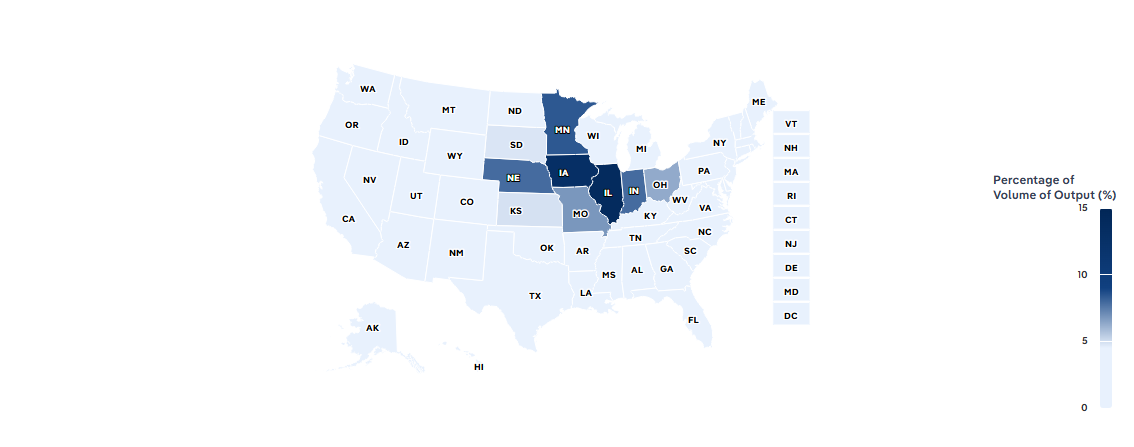
Soybean plants need large fields of open space. The Plains region grows nearly half of the US soybeans because, in addition to climate, it has the necessary acreage dedicated to farmland.
The Great Lakes limit their region's drought potential. Consistent supplies of water and irrigation make the lakes' surrounding states ideal for stable soybean growing.
Business Concentration
| State | Volume of Output (Units) | Population % |
|---|
Plains states dominate US soybean production with vast fertile farmland
- The Plains region, including states like Iowa, Indiana and Nebraska, is the heart of US soybean production due to its expansive, fertile fields and well-established agricultural infrastructure. These states, particularly in areas like the Corn Belt, contain deep and rich soil that is ideal for soybean cultivation. The relatively flat topography also allows for efficient large-scale farming operations.
- The region's climate, which includes adequate rainfall during key growing months, supports soybean production in many areas. Where and when needed, irrigation systems tap into aquifers to supplement rainfall.
- These states' long-standing farming traditions and knowledge translate to more common availability of skilled labor than in other parts of the country. Many farms have been passed down through generations, during which time farmers pass down farming expertise and skills to their families.
- While rising farmland prices pose challenges, the established scale of operations in this region helps maintain cost competitiveness. The concentration of soybean production also supports a robust network of processors and transporters, among other industry infrastructure.
- Land-grant universities in the Plains region like Iowa State University and the University of Nebraska–Lincoln provide crucial support to farmers through their Cooperative Extension Services. These institutions offer research-based information, educational programs and on-the-ground assistance to help farmers improve their agricultural practices, adapt to new technologies and address challenges in crop and livestock management.
The Great Lakes and the Mississippi River provide growers with ample water
- Soybeans demand a reliable water supply, and regions adjacent to the Great Lakes and Mississippi River offer abundant freshwater resources. Access to these major water bodies provides a reliable and cost-effective irrigation source, which helps mitigate risks from periodic droughts or irregular rainfall patterns and facilitates more consistent soybean yields.
- The Great Lakes region's climate, which is moderated by the lakes, can extend growing seasons in some areas. The Mississippi River Valley's alluvial soils are also highly fertile and well-suited for soybean production. River systems, particularly the Mississippi, also offer efficient transportation routes for moving soybeans to processing facilities and export terminals.
- Similar to farmers in the Plains, farmers in the Great Lakes region also have ready access to extension services provided by universities like Michigan State and the University of Wisconsin at Madison. These services are often focused on sustainable farming, exemplified by Michigan State University's Center for Regenerative Agriculture. This Center conducts research and outreach to help farmers improve their operations while implementing sustainable practices, including increasing soil carbon sequestration.
Climate, soil and land use limit soybean cultivation in other US regions
- Soybean farms are less common in other US regions because of soil composition, climate and land availability constraints. Arid climates in much of the Southwest often lack sufficient rainfall, water supply or affordable irrigation methods to support large-scale soybean cultivation, making other crops or rangeland more practical options for those areas.
- Mountainous areas, such as the Appalachian range in the US, have terrain that is poorly suited to mechanized soybean production. Steeper slopes and fragmented, smaller fields limit the ability to use equipment efficiently. In coastal and heavily urbanized regions, especially in the Northeast and parts of California, high land values and intense competition from residential, commercial and specialty-crop uses undermine the potential for large soybean acreages.
- Some areas in the US, like parts of the Southeast, have soil types that are less ideal for soybeans or greater pest and crop disease risk due to climate conditions. These regions often focus on other agricultural products better suited to local weather patterns or higher-value crops that can offset land constraints and costs.
Operate in a location with appropriate climatic conditions
New technology has enabled soybeans to be raised in areas that were previously too difficult to cultivate. However, yields may be insufficient to justify planting and harvesting costs; careful assessment is needed to determine the best choice for planting location and quantity.
Manage seasonal production
Soybean farms can benefit from operating in areas with longer growing seasons or conditions that allow for crop rotation and off-season production.
Key Takeaways
Soybean farms will need to aggressively lower per-bushel costs through scale, efficiency gains and precision input use to stay competitive with other soybean, feed grain and oilseed producers. While some farms can differentiate through identity-preserved, non-GMO or sustainability-certified beans, the industry remains highly price-sensitive, so the lowest-cost producers will capture the most demand over the next few years.
Health-focused alternatives have created a threat to soybeans in both the edible oil and animal feed markets. Some consumers have turned away from soybean and other seed oils due to concerns around the extraction process and high levels of omega-6 fatty acids.
Concentration
LowMarket Share Concentration
Fragmented family farms face rising pressure from concentrated suppliers
- Soybean growing has a long history in the US, so most growers are long-standing, family-run farms that keep costs low by relying on family labor rather than hired workers. The limited availability of suitable farmland poses challenges for expanding soybean acreage but also acts as a barrier to large-scale corporate entry, preserving the traditional, small-operation structure of the industry.
- Senate Judiciary Committee testimony from October 2025 by the American Soybean Association highlighted growing concern among family farmers that rising input costs – driven by upstream consolidation – are squeezing profit while commodity prices have fallen, sharpening the contrast between a fragmented farm base and highly concentrated supplier and processor sectors above it. This cost-price squeeze is increasing financial pressure on marginal family operations and raising questions about whether the next wave of agricultural consolidation will reach farms themselves.
GMO seed producers dominate the soybean seed market
- Genetically modified varieties are the industry standard and have one of the highest adoption rates among soybean farmers for any biotech crop worldwide. Four companies – Bayer, Corteva, Syngenta and BASF – collectively control the vast majority of US soybean seed intellectual property and sales, according to USDA Economic Research Service data from 2023.
- Recent deal activity has deepened this concentration. In 2025, global plant genetics company GDM agreed to acquire and then completed the purchase of AgReliant Genetics, a major North American corn and soybean seed supplier, combining GDM's soybean genetic licensing business and varieties with AgReliant's brands. Around the same time, Bayer began folding 10 regional corn and soybean seed brands into its national Channel lineup for the 2025 selling season, removing long-standing local brands like Fontanelle, Kruger Seeds, Jung and Stewart from the market and reducing the number of distinct soybean seed brands available to farmers.
Upstream and downstream concentration contrasts with fragmented soybean farm ownership
- Unlike the fragmented farm base, both upstream input suppliers and downstream grain traders and crushers show high and rising concentration. On the downstream side, Bunge completed its $34-billion merger with Viterra in July 2025, creating a network of over 600 processing, storage and export facilities across more than 40 countries, strengthening the position of the ABCD trading group – ADM, Bunge, Cargill and Louis Dreyfus – as the dominant force in global soybean flows.
- In machinery, large manufacturers continue to roll up distribution and precision-agriculture technology. This trend is illustrated by AGCO's acquisition of an 85.0% stake in Trimble's agricultural technology portfolio in 2023 and John Deere's 2024 purchase of Hutchinson Farm Supply, both of which concentrate equipment and digital services in a few global platforms, thereby reducing the number of providers of this machinery for soybean farmers.
Have a large supply contract
Soybean farms need a steady supply of seeds, so having a set contract with a seed producer can limit volatility risk and help keep production volumes stable.
Become a member of an industry organization
Many small, family-owned soybean farms have limited resources and can benefit from membership in an industry organization that promotes resource sharing.
Barriers to Entry
HighSteadyLegal
- Legal challenges for new entrants into US soybean farming include navigating an extensive regulatory environment. Farmers must comply with federal and state regulations regarding environmental protection, such as the Clean Water Act and the Resource Conservation and Recovery Act. Additionally, genetically modified organisms (GMOs) regulations require careful adherence to biotechnology and labeling standards. This complex legal landscape can be daunting for newcomers, necessitating legal expertise and often significant investment in ensuring compliance to avoid penalties.
Start-Up Costs
- The start-up costs for soybean farming in the US are substantial, creating a significant barrier for new entrants. Potential farmers must invest in purchasing or leasing land, high-quality seeds and necessary machinery such as tractors, planters and harvesters. Costs for infrastructure, fertility management and potential irrigation systems add to the expense. Access to capital and favorable credit terms are crucial, as the initial financial outlay can be prohibitive without adequate funding.
Differentiation
- Differentiating soybean products in a competitive market poses a distinct challenge for new industry entrants. Newcomers must find ways to distinguish their products, focusing on niche markets such as organic or non-GMO soybeans. Establishing a brand identity and building relationships with buyers can offer differentiation among crops that are otherwise similar.
Capital Expenses
- Capital expenses are a major challenge for new soybean farmers. The initial investment in equipment and technology for soy farming operations is high. This includes purchasing machinery like combines, sprayers and grain storage facilities, which are essential for efficient production and post-harvest handling. The continuous need for technological upgrades to increase yield and stay competitive can strain financial resources, necessitating a robust business plan and secure financial backing to manage these capital-intensive requirements.
Secure economies of scale
Achieving economies of scale allows US soybean farmers to lower production costs by maximizing output. This cost efficiency provides a competitive edge, enabling them to navigate market volatility and enhance profitability, which is crucial for overcoming barriers to entry.
Establish supply contracts for key inputs
Securing supply contracts provides a stable and reliable source of essential farming inputs. This stability helps mitigate risks associated with fluctuating input prices, enabling new entrants to maintain consistent production and better manage cash flow.
Substitutes
ModerateIncreasingCorn farming
- Corn remains the dominant source of animal feed because of its low growing costs. With corn prices rising faster than soybean prices, soy has gained more of an advantage in markets traditionally dominated by corn. Soybeans also offer higher protein content, making them a valuable addition to poultry, pig and cattle feed.
- Soybeans' higher protein value often justifies their higher cost for livestock farmers, making them indispensable in feed formulations. Additionally, the protein content of soybeans is crucial for soy-based human foods and meat replacements, where corn cannot adequately substitute. This ensures soybeans maintain a strong foothold in both animal and plant-based food markets.
In-house
- An increasing number of beef cattle producers are shifting from traditional soybean-based feed to grass feeding. This trend is driven by the rising popularity of grass-fed beef, which is perceived to be healthier for cattle and results in higher-quality meat.
- Despite the draws of its benefits, grass-fed beef is costly, serving only a niche, luxury meat market. Grass-feeding is also more susceptible to extreme weather events and droughts that can wipe out grass fields as compared to having stores of prepared cattle feed.
Other edible oils
- A broad set of other vegetable and specialty oils competes directly with soybean oil in the US, including canola, sunflower, peanut, olive and avocado oils. These substitutes are used in many of the same frying, baking and processed food applications as soybean oil, so buyers can often switch with limited equipment changes.
- Several of these oils, especially avocado and olive, are marketed around their fatty acid profile and are frequently perceived as healthier alternatives. High-oleic versions of sunflower, canola and other oils have gained share in foodservice and packaged foods because of their frying life and oxidative stability.
Produce a differentiated product
Producing a differentiated product allows US soy farmers to offer unique attributes such as non-GMO or organic soy, appealing to niche markets and consumer preferences. This differentiation reduces the threat from substitute crops and enhances market competitiveness.
Develop strong technical product knowledge
Gaining in-depth technical knowledge about soy cultivation enables farmers to optimize crop yields and adapt to environmental changes. This expertise helps maintain high-quality standards, ensuring soy's competitiveness and reducing the appeal of alternative crops in the market.
Supply Chain
Buyers: Price competition
- A relatively small group of multinational grain traders and crushers – ADM, Bunge, Cargill, Louis Dreyfus – controls a large share of global soybean trade and crushing capacity, giving major buyers significant leverage over price and basis levels offered to farmers. These companies can shift origin between countries or substitute with other oilseeds, which limits individual farmers' ability to negotiate premiums, especially in regions with only one or two local elevators or crush plants.
- Large domestic crushers and livestock feed manufacturers also wield bargaining power because they buy in high volume and can blend supplies from multiple states and origins. Expanded US crush capacity for biofuel demand increases local competition in some areas, but buyers still typically set contract terms and quality discounts, leaving most individual soybean growers price-takers.
Suppliers: Limited suppliers for farmers to choose between
- The soybean farming industry faces significant supplier power due to the limited number of providers for essential inputs like seeds, fertilizers and specialized machinery. This concentration allows suppliers to exert considerable influence over prices and terms of purchase.
- With fewer alternatives available, farmers experience reduced bargaining power, forcing them to comply with supplier conditions. The specialized nature of machinery and patented seeds further intensifies dependence.
- Farmers are subject to strong fluctuations in the cost of fertilizer and machinery, which directly impact production costs and affect their overall profitability and competitiveness. Forming cooperatives can empower farmers to negotiate better terms and prices collectively. Diversifying supply sources by incorporating smaller or local suppliers can decrease dependence on major suppliers.
Secure export markets
Accessing international buyers diversifies revenue streams and reduces dependence on domestic markets, helping soybean farmers dilute individual buyer influence and manage concentrated buyer power more effectively.
Offer a competitively priced product
Competitive pricing attracts more buyers and strengthens farmers' market position, improving their ability to negotiate contracts, manage basis risk and partially offset concentrated buyer power.
Key Takeaways
Soybeans are grown in the US almost exclusively by small companies. While some companies produce seeds on a large scale, nearly all soybean farms are small, independent operations. The volatile and labor-intensive nature of soybean farming makes it difficult for one company to capture significant market share.
Market Share
| Company | Market Share (%) | Employees | Locations | Company Type | Headquarters |
|---|---|---|---|---|---|
| Carroll Family Farms | 2.5-5 | 5,001-10,000 | 2 | Private | Carthage, Illinois |
| Baker Farms | 0-2.5 | 51-200 | 1 | Private | Columbus, Georgia |
| Saginaw Valley Seedcorn | 0-2.5 | 51-200 | 1 | Private | Fairgrove, Michigan |
Key Takeaways
Government subsidies help protect soybean farmers when soybean prices decline. Subsidies also reduce risk from revenue volatility caused by harsh growing conditions and adverse weather.
A depreciating US dollar will support a recovering export market. Exports already account for more than half of soybean sales. As the dollar depreciates, exports will grow further.
External Drivers
Demand from organic basic chemical manufacturing
Demand from organic chemical manufacturing boosts the soybean industry since soybeans serve as a raw material for biodegradable plastics, lubricants and other plant-based products. As industries and consumers increasingly prioritize sustainable products, soybean derivatives see rising demand, providing farmers with additional revenue streams.
World price of soybeans
The world price of soybeans directly affects farmers' profitability and planting decisions. High global prices incentivize increased production; low prices strain revenues and reduce innovation. Price fluctuations also influence export competitiveness. A drop in soybean prices poses a threat to the industry.
Trade-weighted index
The trade-weighted index, which reflects the value of the US dollar against other currencies, substantially impacts soybean exports. A strong dollar makes US soybeans more expensive abroad, reducing demand and export revenue. Conversely, a weaker dollar enhances competitiveness, boosting exports since US soybeans become cheaper for international buyers. This economic measure guides strategic export decisions and influences international market share and industry growth. Any depreciation in the US dollar presents an opportunity for US soybean farmers.
Subsidies for soybean farming
Government subsidies provide financial stability for soybean farmers in the form of a buffer against market volatility and adverse weather, which can otherwise threaten farm income and credit access. These bolsters help producers maintain operations, invest in productivity-enhancing technologies and adopt sustainable practices that improve long-term soil and resource management. By increase security and thereby reducing financial risk, subsidies stabilize soybean supply chains, support consistent national production levels and strengthen overall sector resilience.
Regulation & Policy
ModerateSteadyClean Water Act (CWA)
The Clean Water Act regulates discharges of pollutants into US and affects soybean farming primarily through limits on water pollution. Agricultural stormwater runoff and return flows from irrigated agriculture are generally exempt from federal NPDES permitting when they result from precipitation or normal irrigation, although discharges that involve dredged or fill material into jurisdictional waters can still require authorization. As a result, soybean farmers are not usually required to obtain federal discharge permits for ordinary runoff, but they are still expected to implement best management practices, such as buffer strips near streams, cover crops, reduced tillage and careful fertilizer timing, to minimize sediment, nutrient and pesticide losses to nearby waters and to avoid activities in wetlands or streams that would trigger permitting.
Federal Insecticide, Fungicide and Rodenticide Act (FIFRA)
FIFRA governs the registration, sale and use of pesticides in the United States, including those applied to soybeans. Before pesticides can be marketed, the EPA evaluates and registers them, sets use restrictions and establishes label directions intended to manage risks to human health and the environment. For soybean farmers, compliance largely means using only registered products and strictly following the pesticide label, which has the force of federal law, for application rates, timing, methods, buffer requirements, personal protective equipment and drift restrictions, as well as adhering to storage, disposal and record-keeping practices that many labels and state laws require.
Federal Seed Act
The Federal Seed Act is a federal truth-in-labeling law that regulates the interstate shipment of agricultural and vegetable seed, including soybean seed. It requires that seed containers carry accurate information on seed kind and, where applicable, variety, as well as quality characteristics such as purity percentage, germination rate, the presence of noxious weed seeds and any chemical seed treatments. For soybean producers, this framework helps ensure that purchased seed lots meet advertised standards and the labels disclose key attributes, such as genetic variety, quality and treatments, so farmers can make informed planting and stewardship decisions.
Renewable Fuel Standard (RFS)
The Renewable Fuel Standard requires that specified volumes of renewable fuels, including biomass-based diesel and other advanced biofuels made from soybean oil, be blended into the US fuel supply. The EPA's "Set" rules for 2023 through 2025 and the follow-on 2026 through 2027 standards have established increasing volume targets for biomass-based diesel and total renewable fuel, underpinned by expectations of continued growth in biofuel use. This regulatory framework has significantly expanded industrial use of soybean oil for biofuel relative to traditional food markets and, based on USDA and EPA projections, is expected to keep upward pressure on soybean oil demand and influence planting and crushing decisions over the next several years.
Conservation compliance
Conservation compliance provisions under the Food Security Act link eligibility for many federal farm program benefits to the protection of highly erodible land and wetlands. Soybean farmers who produce crops on highly erodible land without an approved conservation plan, or who drain or convert wetlands to enable crop production, risk losing access to these benefits until they correct the violation or obtain relief, so in practice they must maintain conservation plans, avoid new wetland conversions and implement erosion-control practices to remain eligible.
Agricultural Worker Protection Standard (WPS)
The EPA's Agricultural Worker Protection Standard is a federal regulation designed to reduce the risks of pesticide exposure for workers and handlers on farms, including soybean operations. Soybean farmers who employ workers to mix, load or apply pesticides – or to enter treated fields – must provide safety training and access to decontamination supplies, post treated-area warnings and observe restricted-entry intervals listed on pesticide labels. The WPS also requires recordkeeping and emergency response information so that employees can obtain medical care promptly if exposure occurs, which affects how soybean farms schedule spraying and organize labor during the growing season.
Assistance
ModerateSteadyGovernment
Agricultural support programs (FSA and NRCS)
The USDA's Farm Service Agency (FSA) and Natural Resources Conservation Service (NRCS) provide financial assistance, technical support and conservation planning that directly affect soybean producers' cost structure and risk profile. FSA administers commodity, disaster and loan programs; NRCS helps soybean farmers design and implement conservation practices like nutrient management, cover crops and erosion control on working cropland. For example, soy producers commonly work with a local NRCS office to develop a conservation plan, and then use FSA to establish a farm number and access payment and loan programs tied to that plan. This coordinated framework supports both farm income stability and compliance with conservation and eligibility requirements specific to field-crop operations like soybeans.
Federal Crop Insurance Program (FCIP)
The Federal Crop Insurance Program, run by the USDA's Risk Management Agency, offers subsidized yield and revenue insurance that covers most planted soybean acres in the US. Soybean farmers can choose from Yield Protection or Revenue Protection; in practice, the federal government subsidizes a substantial share of the premium and shares underwriting risk with private insurers. This coverage helps producers insure against losses from drought, excess moisture, disease and price declines, helping them secure operating credit and withstand bad crop years.
Environmental Quality Incentives Program (EQIP)
The Environmental Quality Incentives Program, administered by the Natural Resources Conservation Service, provides cost-share and technical assistance for conservation practices on working lands like soybean fields. Soybean growers can receive multiyear contracts to help pay for practices – such as cover crops, reduced tillage, nutrient management and on-farm drainage or water-quality improvements – and NRCS typically shares a significant portion of installation costs. In recent years, EQIP has supported expanded cover-crop adoption in row-crop systems. For soybean producers, this assistance can reduce erosion, improve soil structure and meet sustainability expectations from downstream buyers while offsetting up-front practice costs.
Export credit guarantees
Programs like the Export Credit Guarantee Program's GSM-102 (Guaranteed Sales Mechanism) provide credit guarantees to encourage financing of commercial exports of US agricultural products, including soybeans. By reducing financial risk to lenders, these guarantees support sales to buyers in primarily developing countries that have the foreign exchange capacity to meet scheduled payments. Under authority provided in recent farm legislation, the USDA regularly allocates substantial annual guarantee capacity to back export credit for eligible commodities. USDA has kept GSM-102 active and has expanded and refined its export-financing options over time to boost global demand for US farm products, reinforcing its ongoing relevance for soybean exports.
Non-government
American Soybean Association (ASA)
The ASA helps soybean farmers by advocating for favorable policies, securing research funding and promoting sustainable farming practices. By representing farmers' interests in legislative discussions, the ASA helps shape trade policies that enhance market access and competitiveness. It also provides farmers with resources, educational programs and support networks to navigate the market and adopt new innovation. The ASA seeks to ensure that soybean farmers have the tools and support needed to manage a dynamic agricultural environment.
Farmer cooperatives
Cooperatives support soybean farmers by pooling resources to help farmers can reduce costs, increase profitability and gain better access to markets. This enables farmers to purchase inputs at lower prices and sell their products in larger markets for better rates. Cooperatives also offer benefits like legal support and the potential for improved product quality, contributing to rural development. For instance, they often provide shared facilities like storage and processing plants, helping smaller farmers access economies of scale.
United Soybean Board (USB)
The United Soybean Board manages the national Soy Checkoff program, investing mandatory farmer assessments in research, promotion and education to build demand and resilience for US soybeans. The USB approved budgets of $174 million dollars for 2025 and $121 million dollars for 2026, targeting areas like infrastructure, animal nutrition, bio-based product development and export promotion, which helps soybean farmers tap new markets and meet evolving sustainability expectations without having to coordinate these efforts individually.
Key Takeaways
Input costs remain elevated for soybean farms, with fertilizer, fuel and labor still materially higher than pre-2021 levels even after retreating from their peaks at the start of the current period. Farmers who were unable to lock in inputs before the latest energy-driven price spikes are facing tighter profit on average than better-capitalized operations that secured lower-cost supplies.
Profit for soybean farmers has fluctuated alongside soybean prices. The volatility of these price changes has made it difficult for farmers to quickly balance their costs with falling prices.
Cost Structure Benchmarks
Profit has been limited by volatile soybean prices and high costs
- Profit has trended lower since 2023 as the spike in soybean prices has weakened since 2024, while production expenses have remained historically high. As price takers in a globally traded crop, soybean farmers have limited ability to pass through higher input and financing costs when benchmark prices soften.
- Extreme price volatility driven by shifting export demand, record crush capacity and competition from Brazil has increased year-to-year swings in revenue, but downside years now dominate as prices settle near or slightly above the long-run average. This leaves US soybean farm returns more exposed to small yield shocks or basis changes and contributes to weaker profitability than the broader farm sector when grains as a whole are under pressure.
- To adapt, farmers are focusing on practical cost-saving measures. Embracing precision agriculture can help in managing resources and cutting costs. Farmers can also explore niche, high-profit markets to boost revenue by aligning with consumer preferences that are trending toward organic and sustainable practices.
Purchase costs edge down from 2021 and 2022 peaks but remain structurally elevated
- Operating purchase costs for fertilizer, crop protection, seed and fuel have come off the extreme 2022 highs as global supply chains normalize and some commodity input prices retreat, easing per-acre costs for soybean producers since 2021. However, absolute input prices remain well above pre-pandemic levels, and many costs are ticking higher again coming into the 2026 crop year.
- Machinery and equipment costs have continued to creep up with higher list prices, interest rates and tight availability of parts, keeping capital-related purchases expensive even as fertilizer and chemical inflation cools. Compared with many other row-crop input costs, soybeans still benefit from relatively lower fertilizer intensity, but that advantage is narrowing as all row-crop input costs ratchet to a higher baseline, constraining cost competitiveness against Brazilian producers that rely on different input mixes.
Lower land costs follow crop income downturns
- Effective land costs for soybeans have eased since they peaked during the 2021 to 2022 income boom, and more recent crop budgets have shown lower budgeted rent per acre even as published cash rent surveys remain near record highs. Some landlords have become more flexible on terms and renewals as falling commodity prices and several years of negative projected returns have weakened tenants' ability to pay rent.
- Moderation in rent costs has helped cushion the blow from strong inputs and deflated soybean prices, slowing the shrinking of farm balance sheets. Compared with more geographically constrained specialty crops, soybean producers benefit from broader location options and can more readily shift acres or renegotiate, which slightly improves resilience during times of lower profitability.
Farmers have maintained stable utilities costs despite water supply pressures
- Utilities and energy costs for soybean farms have stayed relatively stable as a share of revenue from 2021 through 2026, even through periods of drought and high irrigation demand. Soybeans are concentrated in rain-fed Midwest regions that are less exposed to high irrigation costs, and efficiency gains in pumping, grain handling and on-farm storage have helped offset higher power prices.
- This stability contrasts with more water-intensive Western crops, where utilities have become a major driver of volatility. For soybean producers, having utilities function more like a predictable fixed cost simplifies budgeting and keeps the main profit challenges centered around wages, agrochemical inputs and machinery.
Slowly rising machinery costs are pushing up depreciation
- Depreciation costs in soybean farming have inched up since 2021 as machinery prices and investments have climbed. Larger farms have increased machinery investment per acre, spreading fixed costs, while many midsized operations stretch the life of existing equipment to avoid high new machine prices and interest rates.
- This gentle but persistent rise in depreciation keeps a floor under fixed costs and limits how far total costs can fall, even as some variable inputs ease. Compared with more capital-light specialty crops, soybean operations carry higher long-run equipment burdens, which can constrain profitability in years of weak prices and challenge rapid acreage expansion.
Farm labor wages continue to rise due to tightening agricultural labor supplies
- Wages for soybean farms have been pushed up over the current period. The USDA notes that a shrinking supply of US workers, high minimum wages in agricultural states like Washington and California and special regulations governing H-2A workers and migrant and seasonal farmworkers have all raised the proportion of wage costs to revenue.
- According to the 2024 USDA Farm Labor Survey, farm operators paid hired workers an average gross wage of $18.95 per hour during the July 2024 reference week, up 2.0% from July 2023. Average gross wages have since risen further, sitting at $19.52 as of the latest May 2025 edition of the survey.
Marketing costs remain low due to B2B sales strategies
- Marketing costs for soybeans have remained low, which is typical of the large contract and mostly B2B agriculture sector. Soybean farmers usually rely on regional connections and established relationships with food processors for the bulk of their sales, making marketing campaigns largely unnecessary. Cooperatives also help to provide connections between farmers and soybean buyers, further reducing marketing costs.
- Bulk sales to processors like ADM and Cargill also help maintain these low costs. Overdependence on large customers can add risk, however, because losing major deals with them can decimate farms' revenue streams.
| Year | Revenue per Employee ($) | Revenue per Enterprise ($M) | Employees per Estab. | Employees per Enterprise | Average Wage ($) | Wages/Revenue (%) | Estab. per Enterprise | IVA/Revenue (%) | Imports/Demand (%) | Exports/Revenue (%) |
|---|
Industry Data
| Year | Revenue ($M) | IVA ($M) | Estab. (Units) | Enterprises (Units) | Employment (Units) | Exports ($M) | Imports ($M) | Wages ($M) |
|---|
Role Specific Questions
- Farms must grow multiple crops to avoid losing income during growing seasons.
- The US's dominance in the soybean market makes competition from imports minimal.
- Soybeans are especially subject to price fluctuations.
- Droughts have drastically impacted soybean production over the past decade.
- Genetically modified soybeans have dominated the industry.
- Automated harvesters and planters are frequently used in soybean growing.
- Subsidies typically account for a moderate portion of soybean farm revenue.
- As an industry that does not typically sell to consumers, organic certification is not important to soybean growers.
- Soybean farms generally have moderate profit.
- Farms are able to avoid seasonality by growing multiple crops.
External Impacts Questions
- Increases in demand for soybean oil result in higher demand from oilseed processors and, ultimately, higher prices.
- Higher returns generally encourage growers to devote more resources to soybean growing, thereby raising production and overall industry revenue.
- Any changes in farm policy have a major effect on the returns to soybean growers.
Internal Issues Questions
- Farmers that produce premium soybeans (e.g. organic) can find buyers who are willing to pay a higher price.
- With exports making up a considerable share of the soybean market, entering into contracts to insulate against the risk of price fluctuations is essential.
- Reducing average costs by spreading fixed costs over larger production volumes enables soybean growers to be more competitive. These lower per-unit costs enable farmers to widen profit margins without raising prices.