

Key Takeaways
- In 2025, industry intelligence shifted from static research to embedded infrastructure, powering real-time credit, portfolio, and relationship decisions.
- As CRE softened, banks accelerated diversification into C&I and SMB lending, using sector-level insight to manage risk and uncover durable growth.
- Collaboration between banks, fintechs, and data partners redefined how insight is delivered—directly inside workflows, not alongside them.
Banking leaders entered 2025 facing a perfect storm of credit uncertainty, deposit pressure, and operational complexity—yet also unprecedented opportunity. Throughout the year’s events, panels, and collaborations, one message became unmistakable: banks can no longer afford disconnected data, static risk reviews, or one-size-fits-all portfolio strategies. In response, IBISWorld made a significant investment into transforming how our intelligence flows directly into your day-to-day workflows, empowering lenders, portfolio managers, marketers, and leadership teams with the real-time insight they need—where they need it, when they need it.
Three themes defined the year:
-
intelligence moved inside the workflow — powering risk monitoring, business development, and portfolio management;
-
SMB and C&I banking became priority markets as institutions diversified away from CRE; and
-
collaboration between banks, fintechs, and data partners accelerated, enabling new ways to understand customers and manage risk.
From major integrations with Microsoft 365 Copilot, nCino, and Snowflake, to expanded partnerships with ABA, CFI, and Barlow, IBISWorld spent 2025 redefining how market intelligence supports customer conversations, loan decisions, pricing strategy, and portfolio surveillance. Across conferences like AOBA, nSight, and the Deposit Strategy Summits, as well as thought-leadership collaborations with American Banker and the ABA, industry leaders repeatedly aligned around the same themes: continuous risk monitoring, workflow-enabled intelligence, and more informed, industry-specific relationship banking.

Below is a recap of the year’s most influential events, best practices and trends, as well as recommended strategies for banking leaders to take into 2026.
Events
February 2025 — Acquire or Be Acquired 2025 Takeaways
AOBA 2025 brought together executives, strategists, and IBISWorld analysts to discuss consolidation, efficiency, and cross-functional alignment. The event emphasized the growing importance of unified data, scalable processes, and a shift toward more diversified C&I portfolios.
February 2025 — From Challenges to Opportunities for Community Banks
This event focused on how community banks can compete by leveraging data-driven market insights, diversifying lending portfolios, and building advisory-forward client relationships.
March 2025 — New Jersey: Winning the Wallet Dinner
Senior banking leaders and IBISWorld experts met to explore client-level profitability strategies, focusing on deepening relationships through data-driven cross-sell rather than volume-only client acquisition.
May 2025 — nCino nSight 2025 Recap
Fintech providers, banks, and IBISWorld analysts convened to demonstrate how intelligence-in-workflow is reshaping underwriting, risk review, and RM engagement inside nCino’s platform.
September 2025 — 2025 ABA Bank Marketing Conference
Executives and marketing leaders explored how banks can modernize their go-to-market strategies using market intelligence, segmentation insights, and client-lifecycle data.

October 2025 — Colorado: Winning the Wallet Dinner
Deposit strategists and community-bank leaders met with IBISWorld experts to analyze deposit behavior, industry-specific liquidity patterns, and long-term retention strategies, marking a shift from rate-driven to intelligence-driven deposit strategy.
October 2025 — 2025 American Banker Small Business Banking Conference & Panel with WSFS & Bryn Mawr
This gathering examined evolving SMB banking models and highlighted how banks are adopting embedded intelligence to better understand sector-level risks and opportunities. Building on the American Banker event, this panel brought together IBISWorld researchers, bankers, and risk managers to focus on cash-flow–centric lending, segmentation, and early-warning indicators for SMB portfolios.
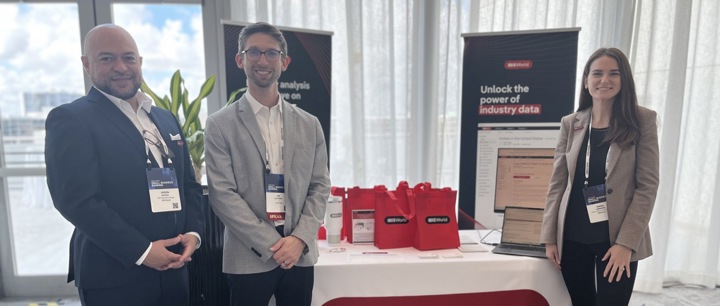
Nov 2025 — 2025 IACPM Recap
Credit portfolio managers and risk executives met with IBISWorld analysts to discuss concentration risk, macro volatility, and portfolio-level stress frameworks — highlighting the profession’s shift into forward-looking, industry-aware portfolio management.
Best practices and trends tracked
Risk Report: Tariffs & Credit Risk 2025
This trend piece breaks down how tariff policy, supply-chain reconfiguration, and cost pressures are reshaping risk profiles across U.S. manufacturing, logistics, and agriculture.
Going into 2026: Banks should carry forward a disciplined approach to integrating tariff and trade-policy risk directly into credit monitoring and portfolio management heading into 2026. As tariff uncertainty continues to affect input costs, inflation, and demand, lenders should proactively stress-test exposed industries, adjust risk ratings, and engage borrowers early to assess resilience. Embedding trade-policy signals into early-warning systems allows banks to detect credit deterioration before it shows up in financials. This action reflects insights from Dr. Rick Buczynski, Chief Economist at IBISWorld, who emphasizes tariffs as a persistent and underappreciated driver of credit risk.
CRE Risk: Where C&I Becomes the Opportunity
A deep dive into CRE market softening, this article highlights why banks are pivoting into C&I and SMB lending — sectors showing more durable growth and risk-adjusted return profiles.
Going into 2026: From the insights of Jason Ochoa, Relationship Manager on the Banking Team at IBISWorld, Commercial real estate (CRE) risk can expose banks to concentration issues, but industry research enables lenders to strategically diversify into commercial & industrial (C&I) lending and strengthen overall credit defensibility. By leveraging industry insights, bankers can better identify emerging stress in sectors like CRE and shift allocations toward resilient C&I segments before credit deterioration is reflected in financials. This approach helps reduce concentration risk, improve underwriting quality, and support proactive portfolio management.
SMB Banking Q&A with MKInsights2Action
In a conversation with a leading industry strategist, this Q&A highlights the growing complexity of SMB financial needs. Mary Kay Schneider and Tom Sebok discuss sector-specific pressures, cash-flow volatility, and the importance of intelligence-driven segmentation.

Going into 2026: Banks should deepen their focus on how technology strengthens relationships with small and midsize business (SMB) clients by designing digital tools that align with SMB owners’ workflows and priorities to improve adoption and satisfaction. Successful tech deployment hinges on a combination of intuitive self-serve features and strong human support, including training resources, proactive relationship manager outreach, and pilot testing before full rollout. Modern digital banking solutions can boost SMB operational efficiency—streamlining cash flow, accelerating payments, and offering enhanced fraud protection—but banks must also navigate behavioral change, fraud risks, and competitive pressures when introducing new technologies.
Partnerships
IBISWorld Integrates with Microsoft 365 Copilot
This major new integration empowers bankers to access industry intelligence directly through Microsoft 365 Copilot—streamlining research, credit write-ups, portfolio commentary, and business-development preparation inside daily workflows.
Efficient Data Delivery with Snowflake Integration
With IBISWorld data now accessible via Snowflake, banks can plug industry insights directly into risk engines, pricing models, and internal analytics stacks—unlocking true real-time intelligence at enterprise scale.
Continuous Credit Monitoring with nCino Integration
A major milestone for workflow intelligence: IBISWorld’s industry risk data and benchmarks were embedded into nCino, enabling automated context for underwriting, renewals, and RM engagement.
Barlow Research Provides Most Popular Banking Products by NAICS
This partnership expanded IBISWorld’s dataset with Barlow’s proprietary banking insights — creating a richer foundation for market sizing, competitive analysis, and relationship-building strategies.
ABA Banking Podcast Partnership Episode
In this episode, IBISWorld joined the ABA to discuss how banks are embedding industry intelligence into frontline and credit workflows — improving speed, consistency, and market awareness.

CFI Whitepaper on Industry Intelligence
This partnership with the Corporate Finance Institute produced a whitepaper outlining how banks should integrate industry benchmarks and market data directly into credit analysis and portfolio strategy.
SIBCO Offers Business Development Strategies for Bankers
While framed as best-practice guidance, this piece from SIBCO reflects a partnership-based evolution in sales strategy — integrating industry data into RM playbooks to enable smarter targeting and conversations.
Executive action items to carry into 2026
The banking landscape of 2025 demanded faster insight, clearer early-warning indicators, and tighter alignment between risk, sales, and strategy teams. Across the year, events and trend analyses demonstrated that the banks outperforming today’s uncertainty are the ones investing in industry intelligence embedded directly into their workflows—not tacked on as an afterthought.
Here are three tangible next steps for leadership teams looking to activate the insights, integrations, and best practices showcased throughout 2025:
1. Operationalize continuous risk monitoring using IBISWorld’s integrations.
Leverage the Snowflake integration or IBISWorld’s API Capabilities to connect industry data directly into your credit models, dashboards, and early-warning systems. Activate the nCino integration to empower RMs, underwriters, and credit analysts with sector-specific market dynamics during loan origination and annual reviews—reducing research time and improving decision quality.
2. Equip frontline teams with industry context inside their native workflows.
Use Microsoft 365 Copilot to auto-generate credit memos, portfolio summaries, and borrower conversations with industry trends embedded instantly into your existing tools. Improve prospecting efforts with Market Sentiment data from Barlow Research and know who to call, and when, leveraging RelPro’s buyer intent data.
3. Partner with your IBISWorld Client Relationship Manager to design your 2026 roadmap.
Your CRM can help you:
- Identify which integrations fit your risk and growth strategy
- Enable training for RMs and credit teams
- Embed early-warning indicators into portfolio processes
- Build industry-informed marketing and deposit strategies
- Align insights with your credit culture and regulatory expectations
Final Word
As banks move into 2026, the leaders will be those who translate insight into execution. The integrations, partnerships, and best practices that defined 2025 were built to change how intelligence operates inside banks—not as a separate research step, but as a core input to credit decisions, portfolio management, relationship banking, and growth strategy. Embedding industry context directly into daily workflows enables teams to move faster, manage risk proactively, and make more consistent, defensible decisions.
Your dedicated IBISWorld Client Relationship Manager is central to activating this approach. By partnering closely with your CRM, you can align integrations to your risk and growth priorities, enable targeted training for credit and relationship teams, and embed early-warning indicators into portfolio processes. This collaboration also supports more informed marketing, deposit, and business development strategies grounded in industry reality.
IBISWorld remains committed to helping banks operate with greater confidence—delivering trusted, human-verified industry intelligence directly into the workflows where decisions are made.