
IBISWorld Platform
Answer any industry question in minutes with our entire database at your fingertips.

IBISWorld forecasts the total mass of exports by sea to increase by 3.0% in 2025-26, to reach 1,595.6 million tonnes. Increased overseas demand for Australian commodities, including iron ore and copper, will underpin this rise. Copper prices have surged as countries accelerate investment in AI data centres, renewable energy grids and electric vehicles, all of which rely heavily on the metal. Global supply disruptions have amplified this trend. Flooding in the Democratic Republic of the Congo, a collapse at Chile's El Teniente mine in July 2025, and protests at mines across Peru have tightened global supply at a time when demand is surging. These constraints have opened the door for Australian exporters to capture a larger share of the market.Liquefied natural gas (LNG) has become a significant commodity export for Australia in terms of value following substantial investments in LNG facilities. LNG carries far less mass than coal or iron ore, reducing its contribution to the total mass of exports by sea. LNG exports reached 79.2 million tonnes in 2024-25, up from 25.0 million tonnes a decade ago. However, LNG export volumes have marginally lost momentum over the past five years. Weaker crude oil prices and a persistent global gas glut are expected to continue, especially as the United States and Qatar push ahead with major production expansions through 2025-26. By contrast, gold is emerging as one of Australia's most valuable export commodities. Although mass export volumes remain comparatively low, the Minerals Council of Australia forecasts that gold will overtake LNG as Australia's second-largest export by value in 2025-26, with earnings rising on the back of strong prices and expanded output from gold mines.Iron ore production continues to grow in volume and remains Australia's most valuable export. Iron ore supports the construction requirements of countries like China, where economic growth remains strong, albeit slowing slightly. A weak property market in China has reduced iron ore consumption, coinciding with the country's measured efforts to shift towards less steel-intensive manufacturing. At the same time, growth in global seaborne supply from countries like Brazil is expected to place downwards pressure on iron ore prices in the second half of 2025-26, according to ING. Meanwhile, coal export volumes have declined in recent years as clean energy gains ground. Nonetheless, demand remains supported by the energy needs of countries like Japan and India, even as both pursue greener alternatives. In India's case, increased domestic coal production and gradual shifts towards renewables have tempered growth in import demand. Overall, IBISWorld forecasts the total mass of exports by sea to grow at a compound annual rate of 1.0% over the five years through 2025-26.
Curious about what drives these trends? IBISWorld's analyst coverage on the total mass of exports by sea includes detailled analysis on the current performance, outlook and industries affected.
2007-2033
This report analyses the total mass of exports that leave Australia by sea. This includes all throughput volume of bulk, break-bulk and containerised cargo that passes through Australian ports. The data for this report is sourced from the Queensland Government Statistician's Office and is measured in millions of mass tonnes exported in each financial year.
IBISWorld Industry Reports are available in multiple formats to fit seamlessly into your workflow.

Answer any industry question in minutes with our entire database at your fingertips.
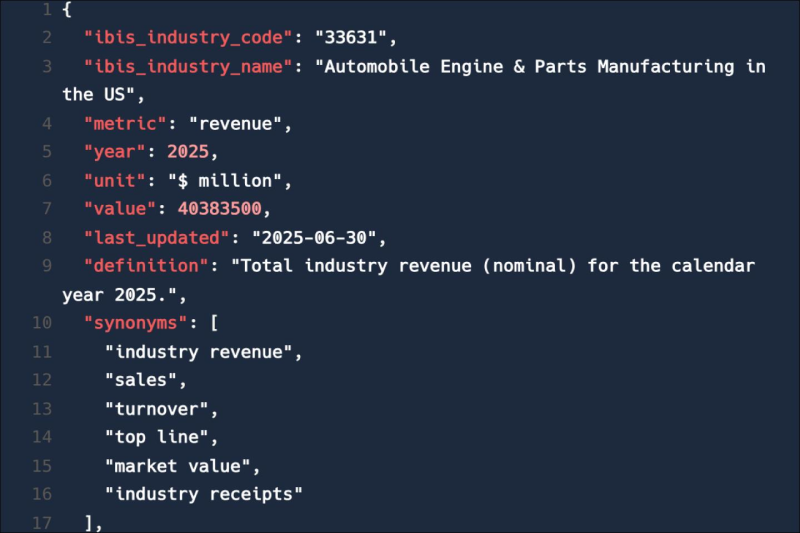
Feed trusted, human-driven industry intelligence straight into your platform.
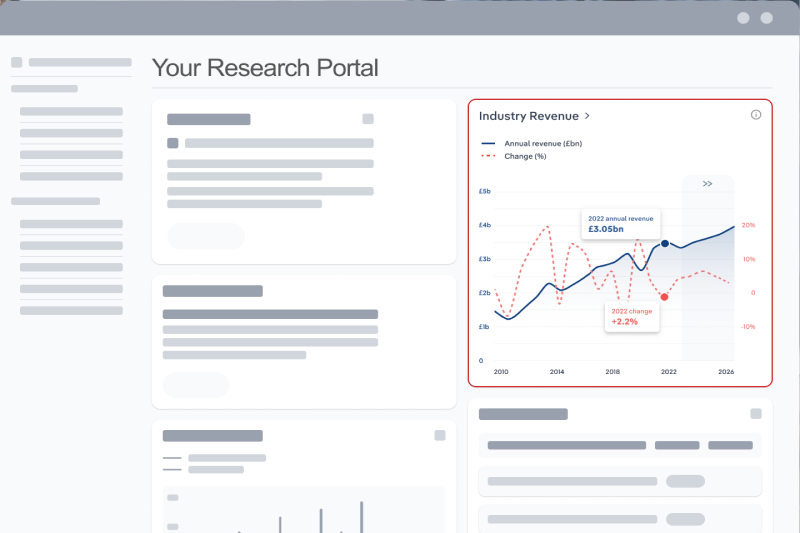
Streamline your workflow with IBISWorld’s intelligence built into your toolkit.
Explore industries with similar markets, supply chains, and economic drivers to gain broader context and insights.
| Industry | Country | Last 5-yr CAGR | Forecast 5-year CAGR | Revenue |
|---|---|---|---|---|
| Rail Freight Transport in Australia |

|
XX% | XX% | $XX |
| Water Freight Transport in Australia |
|
XX% | XX% | $XX |
| Port and Water Transport Terminal Operations in Australia |
|
XX% | XX% | $XX |
| Port Construction in Australia |
|
XX% | XX% | $XX |
| Railway Track Construction in Australia |
|
XX% | XX% | $XX |
| Dredging Services in Australia |
|
XX% | XX% | $XX |
When the stakes are high, you need intelligence that cuts through the noise—wherever you work.
The total mass of exports by sea in Australia in 2026 was 1,595.6 million tonnes.
The total mass of exports by sea in Australia grew by 1.03% in 2026.
IBISWorld’s data and analysis on total mass of exports by sea in Australia includes forecasted growth rates over the next five years.