
IBISWorld Platform
Answer any industry question in minutes with our entire database at your fingertips.

IBISWorld forecasts the motor vehicle price index to decline by 0.6% in 2024-25 to 110.9 points. The index fell significantly in the September 2024 quarter and has remained relatively steady throughout the remainder of 2024-25. An increase in the supply of used vehicles has helped facilitate this trend, marking the first decline in the index since 2017-18. However, while motor vehicle prices have declined slightly in 2024-25, they still remain significantly elevated over the past five years. A decline in Australia's purchasing power against currencies in major motor vehicle manufacturing locations, like China and Thailand, has also placed upwards pressure on import prices, limiting declines in the index throughout 2024-25.Over the three years through 2022-23, motor vehicle prices witnessed the heaviest period of growth since the mid-1990s. Prices were initially inflated by pandemic-related supply chain constraints, particularly for crucial components like semiconductors. This caused the price of second-hand vehicles to skyrocket, as consumers flocked to purchase used cars that weren't subject to the supply delays that riddled the new car market. High discretionary income during the period also pushed up demand for luxury vehicles, boosting the average sales price for motor vehicles. As global supply chains rebuilt capacity, supply shortages eased, which limited price growth in 2023-24. However, high inflation continued to push up prices for goods across Australia, with motor vehicles being no exception. Overall, IBISWorld expects the motor vehicle price index to increase at a compound annual rate of 3.3% over the five years through 2024-25.While the motor vehicle price index has increased over the past five years, it remains well down on all-time high levels of 130.1 points, reached in 1995-96. Prior to the expansion witnessed over the past five years, vehicle prices in Australia had declined in the long run, as the Federal Government opened up the domestic automotive manufacturing sector to foreign competition. Tariffs on imported vehicles fell from 45% in 1995 to 25% the following year. The tariff has since been on a long-term decline, eventually falling to its current level of 5% in 2010. Additionally, the exits of Ford in 2016 and Toyota and GM Holden from the Australian Motor Vehicle Manufacturing industry in 2017 ensured that the lion's share of domestic demand for passenger motor vehicles has been satisfied by imported cars. Since these imported vehicles are generally sold at lower prices, this has created a downward trend in average motor vehicle prices over the long term.The largest sources of motor vehicle imports into Australia are Japan, Thailand, the United States and South Korea. While the motor vehicle tariff rate is currently set at 5.0%, Australia already holds free trade agreements with Japan, Thailand, the United States and South Korea, which exempts these countries from the tariff. Consequently, there is less room for prices to fall due to tariff reductions. Nevertheless, over 25% of vehicle imports come from other countries, a significant portion of which are exposed to the motor vehicle tariff.
Curious about what drives these trends? IBISWorld's analyst coverage on the motor vehicle price index includes detailled analysis on the current performance, outlook and industries affected.
1973-2032
This report analyses the price of motor vehicles in Australia. The price index measures the purchase cost of motor vehicles for households and includes household purchases of new vehicles and purchases of second-hand vehicles from businesses or government sectors. The index used is an input for the consumer price index. This report uses data sourced from the Australian Bureau of Statistics and is measured in points, with a base of 100 points in the 2011-12 financial year.
IBISWorld Industry Reports are available in multiple formats to fit seamlessly into your workflow.

Answer any industry question in minutes with our entire database at your fingertips.
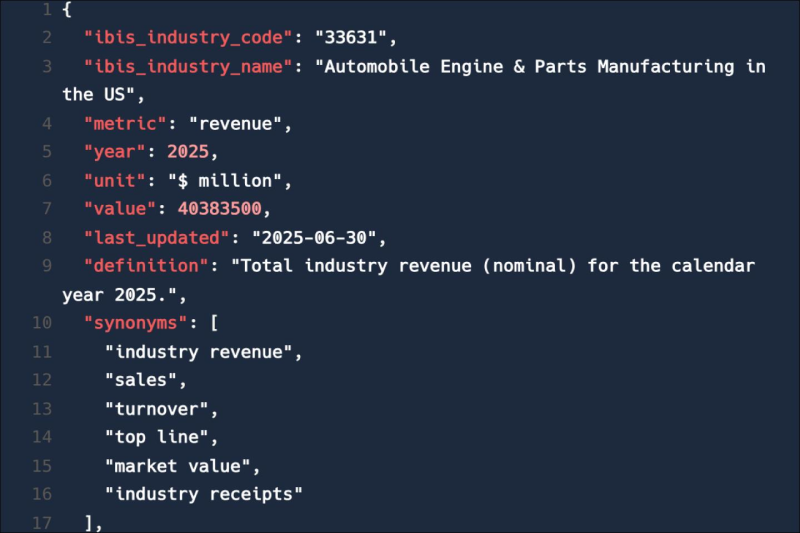
Feed trusted, human-driven industry intelligence straight into your platform.
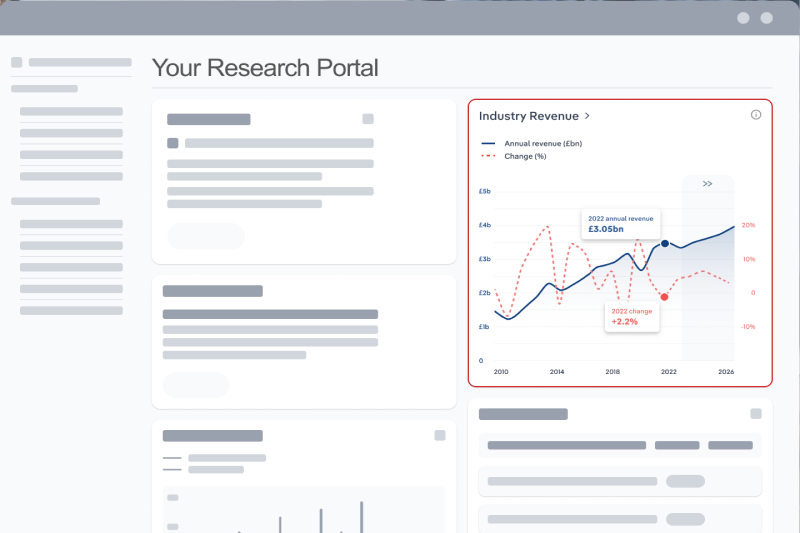
Streamline your workflow with IBISWorld’s intelligence built into your toolkit.
Explore industries with similar markets, supply chains, and economic drivers to gain broader context and insights.
| Industry | Country | Last 5-yr CAGR | Forecast 5-year CAGR | Revenue |
|---|---|---|---|---|
| Motor Vehicle Electrical Services in Australia |

|
XX% | XX% | $XX |
| Automotive Industry in Australia |
|
XX% | XX% | $XX |
| Motor Vehicle Wholesaling in Australia |
|
XX% | XX% | $XX |
| Motor Vehicle Dealers in Australia |
|
XX% | XX% | $XX |
| Motor Vehicle Dismantling and Used Parts Wholesaling in Australia |
|
XX% | XX% | $XX |
| Transport Equipment and Large Vehicle Rental in Australia |
|
XX% | XX% | $XX |
| Transport Equipment and Large Vehicle Rental in Australia |
|
XX% | XX% | $XX |
| Passenger Car Rental and Hiring in Australia |
|
XX% | XX% | $XX |
| Passenger Car Rental and Hiring in Australia |
|
XX% | XX% | $XX |
When the stakes are high, you need intelligence that cuts through the noise—wherever you work.
The motor vehicle price index in Australia in 2025 was 110.9 index points.
The motor vehicle price index in Australia grew by 3.3% in 2025.
IBISWorld’s data and analysis on motor vehicle price index in Australia includes forecasted growth rates over the next five years.